Service-line coverage
built around managed IT, co-managed IT, Microsoft 365, Azure, cloud migration, backup, and helpdesk searches.
We build organic acquisition systems for IT services companies that generate qualified inbound inquiries from Google and AI search tools, independent of your partner ecosystem and who you already know.
built around managed IT, co-managed IT, Microsoft 365, Azure, cloud migration, backup, and helpdesk searches.
connected to SOC 2 readiness, endpoint protection, SIEM-MDR, identity management, phishing resilience, and compliance-driven IT support.
for CIOs, IT Directors, operations leaders, and SMB owners evaluating MSPs, MSSPs, and strategic IT partners.
that ties your firm to hybrid cloud, network refresh, VoIP, business continuity, and vendor-management projects.
so your company shows up when buyers compare managed service providers by capability, vertical, and risk profile.







Before a buyer contacts a firm, they have already completed the first stage of evaluation independently. They searched Google for firms with specific industry experience. They asked ChatGPT which firms specialize in their sector. They reviewed content, assessed credentials, and formed a preference before any partner introduction or referral ever reached them. The firms that appear consistently and credibly across that research journey get the engagement. The firms that depend on referrals alone miss every buyer who did not already know someone there.
Buyers diagnose the problem before they know the solution. Your thought leadership earns authority and trust at this stage.
Buyers explore service categories. Your vertical-specific and service-line pages need to rank here to enter the conversation.
Buyers compare options. Comparison pages and case studies determine who gets shortlisted before the first call.
Buyers validate before committing. Your authority and content depth close the gap between shortlist and signed agreement.

The partner program built the pipeline. Organic search builds the pipeline that does not disappear when the program changes its terms.
Most IT services firms have professional websites listing services, certifications, and partners. What they lack are pages that rank for the searches buyers use when looking for IT providers. The website exists, but the visibility does not.
This gap exists because IT firms rely on referrals, partner ecosystems, and outbound sales. These channels generate pipeline, so SEO is often ignored. As a result, firms never build a scalable inbound channel that works independently of existing relationships.
Today, IT buyers start with search. Whether through Google or AI tools, they find firms already ranking for their needs. If your firm is not visible, you are excluded early while competitors capture those opportunities.
The opportunity is still open. Most IT services firms have not invested in SEO, leaving gaps across services and industries. Firms that build topical authority now will dominate high-intent searches and secure future clients who discover them first.
We manage strategy, technical SEO, buyer-stage content, authority, AI visibility, conversion paths, and reporting for IT Services Companies, so your team can build qualified pipeline without running another internal production operation.
Engagements are priced to the size of the market and scope of work, starting at $2,500 per month. See how pricing scales.
Get StartedEvery engagement we build operates on one principle: organic search is only valuable when it produces qualified inbound client inquiries. These are the six levers we pull to make that happen.
Most IT services firms target their company name and a broad phrase like IT consulting or managed IT services. That covers buyers who already know you.
It does nothing for the buyers who have never heard of your firm and are actively searching for someone with your exact capabilities in their specific industry or technology stack.<br><br>We map keywords to the specific service lines your firm delivers: cloud migration, cybersecurity consulting, digital transformation, systems integration, IT staffing, nearshore development, infrastructure modernization.
Within each service line, we identify the bottom-of-funnel searches that signal a buyer is evaluating vendors right now. Those searches get prioritized first.
The content built around them establishes the topical authority that lifts every related page on your site.
IT services buyers do not search for generic technology help. A CFO at a healthcare company searches for IT consulting for healthcare organizations.
A VP of Operations at a logistics firm searches for IT services for supply chain companies.
Buyers search by vertical, and IT firms that rank for vertical-specific queries win the buyers that matter most to their practice.<br><br>We build a content architecture that positions your firm as the authority in the verticals you serve.
Each vertical gets its own page cluster: a primary landing page targeting the main buyer search, supported by thought leadership content that addresses the IT challenges specific to that industry.
This structure builds the topical depth that search engines and AI models require to recognize your firm as a credible source for industry-specific IT expertise. The result is organic visibility in the exact verticals where your best clients already come from.
When a buyer searches boutique IT firm vs large systems integrator or best cloud migration companies for mid-market, they are mid-shortlist. They know the type of firm they want.
They are comparing options. Most IT services websites have nothing for this search behavior.
No comparison content. No clarity on who they serve best.
No honest answer to the question the buyer is already asking.<br><br>We build the pages that intercept buyers at this exact moment. These are not promotional pages.
They are decision-support pages that answer the genuine question behind the search. Done correctly, these pages rank for high-intent queries, demonstrate strategic clarity about your firm's positioning, and put your name in front of a buyer who is one step from reaching out.
The firms that own these comparison searches start the sales conversation from a position of authority, not from a cold outbound sequence.
IT buyers are technically literate. They evaluate your firm's credibility through the depth of your content, the quality of your methodology documentation, the relevance of your case studies, and the authority signals your domain carries.
Most IT services websites publish surface-level content that does not signal genuine expertise to either buyers or search engines.
That gap is visible in the rankings.<br><br>We build the content and link acquisition strategy that establishes your firm as a credible authority in your category.
That means backlinks from technology publications, CompTIA directories, industry-specific trade media, and partner associations. It means methodology content, implementation guides, and case study architecture that signals deep expertise to IT-literate buyers.
It also sends the trust signals that AI models use to determine which IT firms are worth citing when buyers ask ChatGPT or Perplexity for vendor recommendations in your service category.
IT directors, VPs of Technology, and procurement leads at your target companies ask ChatGPT, Perplexity, and Claude for IT vendor recommendations.
They type queries like best IT consulting firms for financial services mid-market or cloud migration partners for manufacturing and they read the AI-generated answer.
If your firm is not cited in those answers, you are absent from a growing share of the research process that happens before any outbound sequence or referral would have reached you.<br><br>We build the entity authority and structured content that positions your firm to appear in AI-generated responses alongside your traditional search rankings.
This means consistent entity signals across your entire site, structured data that helps AI models understand your service lines, verticals, and credentials, and topical depth that makes your content the source AI tools draw from when answering IT services queries.
The firms investing in AI visibility now will hold the citations that are already redirecting buyer research in your category.
IT services firm leadership does not care about traffic numbers or keyword rankings. They care about qualified inbound inquiries, RFP requests, and new client engagements.
We set up pipeline attribution from day one so you can track which organic pages generate contact form submissions, which service-line or vertical pages produce the highest-quality leads, and how organic-sourced prospects convert compared to referral and outbound channels.<br><br>Monthly reporting connects organic performance to business outcomes: qualified leads by service line, organic pipeline contribution by vertical, cost per organic inquiry compared to outbound, and compounding growth metrics that show the system building equity over time.
Your marketing team gets the data they need to demonstrate pipeline contribution to leadership. Your leadership gets the plain-language revenue picture, not a keyword ranking spreadsheet.

We review the site and market, prioritize the strongest opportunities, then expand the work that produces traction.
We review IT services, business problems, technology environments, decision makers, technical health, authority, proof, and pipeline tracking to identify what limits qualified search demand.
We prioritize and implement service and solution pages, technical issues, comparison content, trust evidence, authority, and consultation paths around real buyer and vendor-selection behavior.
We use search, conversion, and attribution signals to expand the topics and assets producing qualified consultations and inbound IT service opportunities.
This is the before and after for firms that build organic acquisition systems. The left column is where most practices operate today. The right column is what a compounding SEO system produces over 12 to 18 months.
New business depends on vendor partner programs and referral relationships that the firm cannot control, predict, or scale on its own terms.
Buyers research the firm online and find a website that lists certifications and services without explaining why this firm over any other in the same category.
Competitors with similar capabilities but stronger online presence show up in the searches that matter and get the meeting before your sales team reaches out.
Entering a new vertical or service line means starting from zero. No referral network, no organic presence, no inbound pipeline until the outbound effort has run for months.
The marketing team publishes content that generates some social traffic for a few days and then disappears. There is no compounding return on the content investment.
Marketing investment is difficult to justify to leadership because there is no clear connection between activity and revenue.
Organic search generates qualified inbound inquiries from buyers who found the firm through Google and AI tools, independent of any partner program or referral relationship.
Service-line pages, vertical content, and comparison pages answer every question a buyer asks during their research process, building conviction before the first conversation.
The firm ranks for the searches buyers run during vendor evaluation. It gets shortlisted by decision-makers who had never heard of the firm before they searched.
Entering a new vertical generates inbound presence immediately because organic content establishes authority in that space before the referral flywheel has had time to develop.
Content earns backlinks, generates AI citations, and drives qualified traffic for months after publication because it was built to rank and convert, not just to share.
Every inbound inquiry from organic is tracked. Leadership sees pipeline contribution, cost per lead, and compounding ROI in the language they use to make investment decisions.
B2B SEO
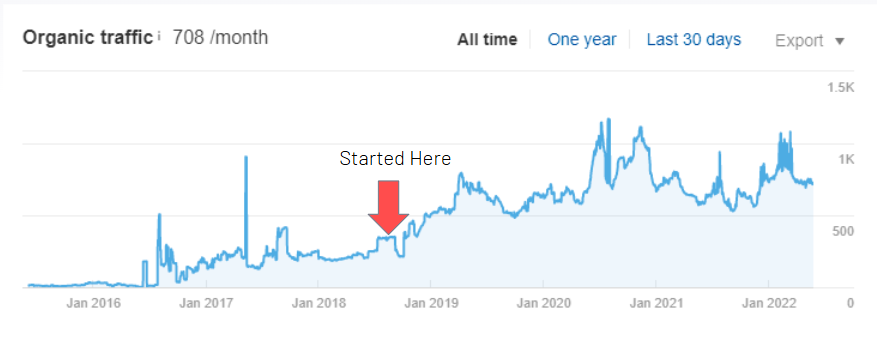
The strategy transformed the site from a brand-dependent asset into a search-driven acquisition channel targeting high-value enterprise buyers.
You built the firm through technical excellence, strong partner relationships, and a client base that refers others.
The model worked well until the referral pace slowed, the partner program changed its incentives, and the sales team hit a ceiling it cannot push through on outbound alone.
You understand that organic search is a long-term asset, but you have never had a partner who could connect SEO investment to pipeline outcomes in the language you actually use to run the business.
You own the pipeline number and you are hitting the limits of what outbound and partner referrals can produce on their own. You have watched competitors show up in searches that your firm should be winning.
You know that buyers are researching before they take a call, and you want your firm to be part of that research. You need a pipeline channel that warms buyers before your team reaches out, not one that adds another cold sequence to an already saturated outreach environment.
You run marketing for an IT services firm, likely as a team of one or two, and leadership expects you to contribute to pipeline. You publish content, manage the website, and coordinate campaigns, but organic search has never been built properly.
SEO has been on your roadmap since you started the role. You know the firm has genuine expertise and real client wins that could rank, but you do not have the bandwidth to build a full organic strategy on top of everything else you own.
You need a partner who can do the strategy and execution, and give you the reporting language to show leadership what it produced.
Partner programs and referrals close deals with buyers who already know you exist. Search produces deals with buyers who have never heard of your firm and are actively looking for what you offer right now. An IT director searching for cloud migration services for financial services companies is expressing intent that no outbound sequence can manufacture. The firms that rank for that search are already in the conversation before your sales team has a chance to reach out. SEO does not replace partner channels. It generates the pipeline those channels cannot produce on their own.
A website that exists and a website that ranks are different things. Most IT services firm content is written to confirm capabilities to buyers who already know the firm, not to appear in front of buyers who are searching for a solution. That content rarely targets the specific queries buyers use during evaluation, rarely builds the internal linking structure that establishes topical authority, and rarely earns the external signals that search engines and AI models require to rank content competitively. The expertise inside your firm is real. The organic system that connects that expertise to buyers who are actively searching has not been built yet.
A long buying cycle is the reason SEO works so well for IT services firms. Your buyers spend months researching before they contact anyone. They read content, compare firms, evaluate credentials, and form a shortlist through organic research. If your content exists across that research journey, you are building the buyer's conviction before your sales process even starts. A firm that appears consistently across the cloud migration research journey for financial services companies is already the preferred choice by the time the buyer fills out a contact form. SEO compresses the sales cycle by establishing authority before the meeting, not after.
Bottom-of-funnel service pages targeting high-intent searches often produce inbound inquiries within three to five months for firms that start from a functional website with a clean technical foundation. The broader topical authority program, including vertical content, comparison pages, and AI search visibility, compounds over a twelve to eighteen month window. We sequence the work so the highest-commercial-intent pages go live first. You see early pipeline signals before the full system is built, and the equity compounds every month after that. The firms that started this twelve months ago are seeing results now. The firms that start today will see results in their next planning cycle.
We start with the combination of highest search volume and clearest commercial intent for your specific firm. That means the service lines and verticals where buyers are actively searching, where the competitive gap in search is most closable, and where a new inbound lead converts to revenue at the highest rate for your business. We map that against your existing content assets, your partner and client base signals, and the verticals where your credentials are strongest. The result is a sequenced build that produces pipeline from the highest-priority searches first and expands topical coverage systematically from there.
Boutique and mid-size IT firms regularly outrank larger companies for vertical-specific and service-line searches because large generalist firms cannot produce the topical depth that search engines reward for niche queries. A firm that builds genuine authority in cloud migration for healthcare will outrank a national generalist for that specific search. Specificity is the advantage smaller firms hold in organic search.
Existing case studies and technical documentation are strong starting assets. We audit what you have, identify the content that can be restructured for search visibility with minimal effort, and use it as the foundation for the topical authority architecture. Most IT services firms have more usable content than they realize. The work is in structuring it to rank and connecting it to the buyer journey searches that produce qualified leads.
When a technology decision-maker asks ChatGPT or Perplexity for IT consulting firms that specialize in their industry, the AI draws from entities it has indexed as credible sources for that category. Firms with consistent entity signals, structured service and vertical content, and authority from relevant external sources get cited. We build the entity architecture that positions your firm to appear in those AI-generated responses, which now influence a significant share of the vendor shortlisting that happens before any human-to-human contact.
Every engagement starts with entity cluster research and a full keyword map across your service lines and target verticals. We build the priority service and vertical pages first, then layer in comparison content, thought leadership, and AI visibility work. You receive monthly reporting tied to pipeline metrics, not vanity numbers. The engagement is structured as a compounding system, not a one-time project, because the value of organic search grows with every month the asset is built and maintained.
We handle strategy, content production, keyword architecture, and reporting. Your team's input is primarily subject matter expertise: reviewing content for technical accuracy, approving strategy decisions, and providing access to existing materials. Most IT services marketing teams spend two to four hours per month on review and approval. The engagement is built to run with a lean internal team because we understand that a solo marketing manager or a small team cannot take on a heavy production burden on top of everything else they manage.
IT firms that sell nationally compete on service-line and vertical authority. The keyword strategy prioritizes industry-specific and capability-specific searches that buyers run regardless of geography. IT firms with regional coverage add local and metro-area targeting to that foundation. Both models use the same page architecture and content strategy. The keyword prioritization and geographic signals in the content differ based on where the firm actively delivers and where it wants to grow.
Every day your firm is absent from organic search, that buyer finds someone else. We build the system that puts you in front of buyers during their research process, before any outbound sequence or referral would have reached them.
Get Your Free SEO Growth Plan Or explore how our engagements are structured