
Service-line coverage
built around 3PL, freight brokerage, warehousing, procurement, inventory planning, and transportation optimization searches.
We build organic acquisition systems for logistics and supply chain firms that generate qualified inbound inquiries from supply chain directors, VP of Operations, and procurement leaders through Google and AI search tools, independent of who your account managers know and which shippers happen to stay active.
built around 3PL, freight brokerage, warehousing, procurement, inventory planning, and transportation optimization searches.
covering WMS, TMS, OTIF, dock-to-stock, cold chain, last-mile, drayage, and supplier-performance language buyers already use.
for shippers, manufacturers, distributors, and ecommerce operators comparing logistics partners by mode and network strength.
that reinforces lane expertise, SLA performance, carrier network depth, and supply-chain resilience.
so your firm is visible when operations leaders shortlist partners for freight, warehousing, and supply-chain transformation.








Before a buyer contacts a firm, they have already completed the first stage of evaluation independently. They searched Google for firms with specific industry experience. They asked ChatGPT which firms specialize in their sector. They reviewed content, assessed credentials, and formed a preference before any partner introduction or referral ever reached them. The firms that appear consistently and credibly across that research journey get the engagement. The firms that depend on referrals alone miss every buyer who did not already know someone there.
Education and diagnostic content earns authority and trust before the supply chain leader has defined which type of provider they need.
Service-line and vertical-specific pages need to rank here so your firm is present when the shipper is defining provider requirements.
Comparison and positioning pages intercept shippers who are mid-shortlist, already know what they want, and are deciding which provider to contact for an RFP first.
Capability documentation, case studies, and network credentials validate the decision and close the gap between shortlist and signed master service agreement.

Referrals win RFPs from shippers who already know your firm. Search wins RFPs from supply chain leaders who are actively evaluating providers and have never spoken to one of your account managers.
Most logistics and 3PL firms have professional websites outlining services, industries, and network coverage. What they lack are pages that rank for the searches supply chain leaders use when evaluating providers. The capabilities exist, but the visibility does not.
This gap exists because logistics firms rely on broker relationships, networks, and account growth. These channels generate business, so SEO is often ignored. As a result, firms do not build a scalable inbound channel that works independently of existing connections.
Today, buyers start with search. Supply chain leaders use Google and AI tools to find providers already ranking for their needs. If your firm is not visible, you are excluded early while competitors secure those opportunities.
The opportunity is still open. Most logistics firms have not invested in SEO, leaving gaps across services and industries. Firms that build topical authority now will dominate high-intent searches and capture future RFPs from buyers who discover them first.
We manage strategy, technical SEO, buyer-stage content, authority, AI visibility, conversion paths, and reporting for Logistics and Supply Chain Firms, so your team can build qualified pipeline without running another internal production operation.
Engagements are priced to the size of the market and scope of work, starting at $2,500 per month. See how pricing scales.
Get StartedEvery engagement we build operates on one principle: organic search is only valuable when it produces qualified inbound client inquiries. These are the six levers we pull to make that happen.
Most logistics firm websites target broad phrases like 3PL provider or freight broker. Those searches surface national logistics giants, aggregator platforms, and directory listings that regional and mid-size providers cannot compete against on domain authority or ad spend.
Broad keyword targeting produces undifferentiated traffic and almost nothing for shipper acquisition from supply chain leaders actively evaluating providers for a specific industry and service need.<br><br>We map keywords to the specific industries and verticals where your firm has genuine operational history: food and beverage cold chain, pharmaceutical and healthcare distribution, retail and consumer goods, e-commerce and DTC fulfillment, automotive and industrial parts, construction materials, technology hardware.
Within each vertical we identify the bottom-of-funnel phrases that signal a supply chain leader is actively evaluating logistics providers right now. Those pages are built first and establish the topical authority that lifts every related page on your site.
Regional and mid-size logistics firms consistently outrank national providers for industry-specific and service-line-specific searches because operational depth and vertical specificity beat generalist scale for niche logistics queries.
Supply chain leaders and operations executives do not search for a logistics provider in general. A Director of Logistics at a pharmaceutical distributor searches for cold chain 3PL providers for temperature-sensitive pharmaceutical distribution.
A VP of Supply Chain at a furniture manufacturer searches for LTL freight brokers for oversized and white-glove delivery. A procurement manager at a retail company searches for cross-docking and transloading services for retail import distribution.
Buyers search by modal, service type, and operational context, and the firms that rank for those specific combinations win the evaluation conversations that lead to contracts.<br><br>We build a content architecture that positions your firm as the authority for the shipper profiles and operational requirements your network actually serves.
Each service line and modal capability gets its own page cluster: a primary landing page targeting the main shipper search, supported by operational content addressing the specific logistics challenges and decision criteria for that service type and industry.
This creates the topical depth that search engines and AI models require to recognize your firm as a credible source for specialized logistics work.
The result is inbound visibility in the exact operational contexts where your strongest shipper relationships and network capabilities already exist.
When a supply chain director searches boutique 3PL vs national logistics provider for mid-market e-commerce or best cold chain logistics companies for pharmaceutical distribution, they are already mid-shortlist. They know the type of provider they want.
They are comparing capabilities, technology integration, and geographic coverage, and deciding who to contact for a capability review first. Most logistics firm websites have nothing for this search behavior.
No content that answers the genuine evaluation question the shipper is asking.
No clarity on why a specialized regional provider outperforms a national generalist for their specific operational requirements and service profile.<br><br>We build the comparison and positioning pages that intercept supply chain leaders at this exact moment.
These are capability-focused decision-support pages that answer the real question behind the search with operational specificity and honest positioning.
Done correctly, they rank for high-intent evaluation queries, demonstrate strategic clarity about your firm's service depth and network strengths, and put your name in front of a shipper who is one step from issuing an RFP.
The logistics firms that own these searches enter the provider evaluation conversation already positioned as the credible specialist, not as one of dozens of providers cold-calling the same supply chain contact list with the same pitch.
Supply chain directors and VP-level operations leaders evaluate your firm's credibility through the depth of your operational knowledge, the quality of your case studies against their own industry context, the technology and visibility capabilities you demonstrate, and the authority signals your domain carries in the logistics and supply chain space.
Most logistics firm websites publish generic shipping tips, carrier market updates, and capacity reports written for internal stakeholders rather than shipper-side decision-makers evaluating providers for a strategic outsourcing decision.<br><br>We build the content and authority signals that establish your firm as a credible source in your logistics specializations.
That means backlinks from Logistics Management, DC Velocity, Supply Chain Dive, industry trade associations, and sector-specific operations media.
It means operational thought leadership that reflects genuine expertise in the supply chain challenges and modal complexities your shipper clients face.
It also builds the trust signals that AI models use to determine which logistics firms are worth citing when a supply chain leader asks ChatGPT or Perplexity for provider recommendations in a specific vertical or service category.
The firms that build these signals now will be the ones AI tools cite as authoritative sources in their logistics specializations.
Supply chain directors, VP of Operations, and procurement leaders at your target companies ask ChatGPT, Perplexity, and Claude for logistics provider recommendations.
They type queries like best 3PL providers for cold chain pharmaceutical distribution or freight brokers specializing in e-commerce cross-border fulfillment and they read the AI-generated answer as a trusted shortlist in the same way they previously read a peer recommendation from another supply chain executive.
If your firm is not cited in those answers, you are absent from a growing share of the provider evaluation process that now happens before any sales contact is initiated.<br><br>We build the entity authority and structured content that positions your firm to appear in AI-generated recommendations alongside your traditional search rankings.
This means consistent entity signals across your entire site, structured data that communicates your service lines, industry verticals, geographic coverage, and operational credentials to AI indexing systems, and topical depth that makes your content the source AI tools draw from when answering logistics provider queries.
Nine in ten B2B buyers already use search tools including AI to research vendors.
The logistics firms investing in AI search visibility now will hold the provider citations that are redirecting shipper research in your service categories before your competitors recognize that the shift has happened.
Logistics firm owners, VPs of Sales, and account leadership do not care about website traffic numbers or keyword position reports. They care about new shipper contracts, account expansions, and the contract revenue those produce.
Most SEO reporting delivered to logistics and supply chain firms is a traffic and ranking summary that no sales leader can connect to a shipper contract.
That disconnect is exactly why organic search investment never clears the approval threshold at most regional and mid-size logistics operations.<br><br>We set up pipeline attribution from day one so you can see exactly which organic pages generate shipper inquiry form submissions and inbound calls, which vertical and service-line pages produce the highest-value leads, and how organic-sourced inquiries convert compared to broker referrals and outbound prospecting channels.
Monthly reporting connects organic performance to business outcomes in language logistics leadership uses: qualified shipper inquiries by vertical and service line, organic pipeline contribution compared to other channels, cost per organic shipper inquiry, and compounding growth metrics that show the system building equity over time.
Your marketing manager gets the reporting language to present pipeline contribution to the VP of Sales and ownership without translating a keyword spreadsheet, and leadership gets the evidence to connect the investment to the shipper pipeline it produced.

We review the site and market, prioritize the strongest opportunities, then expand the work that produces traction.
We review logistics services, lanes and networks, shipper problems, procurement roles, operational proof, technical health, and opportunity tracking to identify what limits qualified search demand.
We prioritize and implement service and solution pages, technical issues, sector content, network evidence, authority, and quote paths around real buyer and vendor-selection behavior.
We use search, conversion, and attribution signals to expand the topics and assets producing qualified shipper inquiries, quote requests, and contract opportunities.
This is the before and after for firms that build organic acquisition systems. The left column is where most practices operate today. The right column is what a compounding SEO system produces over 12 to 18 months.
New shipper business depends on broker relationships, carrier network introductions, and account expansions that the firm cannot predict, control, or scale independently of who the account managers know.
The website describes services and coverage but ranks for nothing a supply chain director searches when actively evaluating logistics providers for a specific vertical, modal, or fulfillment requirement.
National providers and better-funded competitors appear in industry-specific and service-line searches that your firm should win based on operational depth and regional network strength.
Expanding into a new vertical or adding a new service line means starting with zero organic presence and no inbound pipeline until outbound and trade show activity has been running for months.
Operational content and market updates are published internally and shared at industry events. They generate no compounding return and produce no inbound from shippers who have not already been reached by your sales team.
Marketing investment is hard to justify to ownership and the VP of Sales because there is no clear connection between what was produced and which shipper contracts came in through that channel.
Organic search generates qualified inbound inquiries from supply chain directors and operations leaders who found the firm through Google and AI tools, independent of any broker relationship or referral introduction.
Vertical-specific pages, service-line content, and comparison pages answer every operational question a shipper asks during their evaluation process, building preference before the RFP is issued.
The firm ranks for the searches supply chain leaders run during provider evaluation and lands on day-one shortlists for shippers who had never heard of the firm before they searched.
Entering a new vertical or launching a new service line produces inbound presence faster because organic content establishes authority in that space before the trade show and outbound cycle has time to develop.
Operational content earns backlinks, generates AI citations, and drives qualified shipper traffic for months after publication because it was built to rank and convert, not to share at a trade show and then disappear.
Every inbound inquiry from organic is tracked. Ownership and the VP of Sales see shipper pipeline contribution, cost per inquiry, and compounding ROI in the language they use to approve investment decisions.
B2B SEO
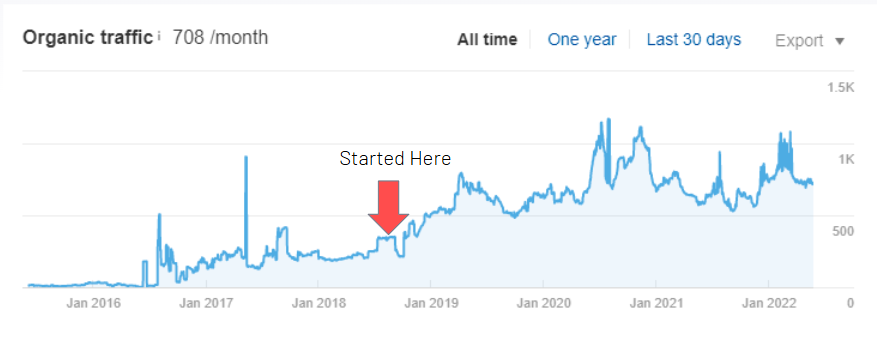
The strategy transformed the site from a brand-dependent asset into a search-driven acquisition channel targeting high-value enterprise buyers.
You built the operation through strong carrier relationships, a reliable shipper base, and a network that produced referrals and repeat business over years of service execution.
The model worked until a few large accounts consolidated to national 3PLs, the broker network started producing diminishing returns, and new shipper acquisition became harder to predict from one quarter to the next.
You understand that organic search is a long-term asset, but the firm has never had a dedicated marketing function to build it and you have never found a vendor who could frame SEO in the language you actually use to run the business: new shipper contracts, pipeline volume, cost per contract, and compounding return on the investment.
You own the new business number and you are hitting the ceiling of what outbound prospecting, trade show networking, and broker referrals can produce on their own.
You know that 95% of the time the winning vendor was already on the shipper's day-one shortlist, and shippers build that shortlist through online research before your sales team ever reaches out. You want your firm to be on that day-one shortlist.
You need a pipeline channel that generates warm inbound from supply chain leaders who are already in evaluation mode, not one that adds another cold call to a prospecting list that every national 3PL and freight broker is already working harder than you.
You run marketing for a logistics firm, often as a team of one, and leadership expects you to contribute to shipper pipeline. You manage the website, produce content, coordinate trade shows and industry events, handle social media, and own the brand presence.
Organic search has been on the plan for as long as you have been in the role. You know the firm has genuine operational depth and real industry case studies that could rank, but you do not have the bandwidth to build a full organic strategy on top of everything else you own.
You need a partner who handles strategy and execution, not one who delivers a keyword list and expects your team to build the content engine from scratch alongside every other priority.
Relationships and referrals produce RFPs from shippers who already know your firm. Search produces RFPs from supply chain leaders who are actively evaluating providers and have never heard your name. A Director of Logistics at a food manufacturer searching for cold chain 3PL providers for temperature-controlled distribution is expressing buying intent that no outbound call and no broker referral can manufacture on demand. The providers that rank for that search are already on the shortlist before your sales team has a chance to make contact. SEO does not replace relationship channels. It generates the pipeline those channels cannot produce on their own: from shippers outside your existing network who are qualified, motivated, and already building their evaluation shortlist right now.
The engagement is designed for logistics firms without a dedicated marketing function. We handle strategy, keyword architecture, content production, link acquisition, and monthly reporting. Your team's involvement is limited to subject matter input: reviewing content for accuracy against your operational capabilities and case histories, approving strategic decisions, and providing access to existing service documentation or shipper case study materials. Most solo marketing managers at logistics firms spend two to four hours per month on review and approval. That is the entire internal time commitment. The engagement runs on our execution so your firm can build an inbound shipper pipeline channel without adding a full content production workload to a team that is already stretched across trade shows, account support, and brand management.
Driver recruiting and carrier acquisition content dominates most logistics firm websites because those are high-volume SEO categories with strong search demand. But that content does not produce shipper pipeline. A page that ranks for CDL driver jobs in the Midwest does not generate an inbound inquiry from a VP of Supply Chain evaluating 3PL providers for a distribution outsourcing decision. We build a completely separate client acquisition architecture: vertical-specific shipper landing pages, service-line positioning pages, comparison and shortlist content, and authority signals structured to intercept supply chain decision-makers during the research and evaluation stages of the provider selection journey. The shipper audience that produces contract revenue requires entirely different content than the carrier and driver audience, and we build for the one that generates logistics contracts.
Bottom-of-funnel vertical and service-line pages targeting high-intent shipper searches often produce inbound inquiries within three to five months for firms that start from a functional website with a clean technical foundation. The broader authority program, including comparison content, AI search visibility, and backlink acquisition from logistics trade sources, compounds over a twelve to eighteen month window. We sequence the work so the pages most likely to produce qualified shipper inquiries go live first. You see early pipeline signals before the full system is built, and the compounding equity grows every month after that. The logistics firms that started this process twelve months ago are receiving inbound RFP inquiries from shippers who found them through search and were not on the firm's existing account list. The firms that start today will see those results in their next planning cycle.
Regional 3PLs and freight brokers regularly outrank national providers for industry-specific and service-line-specific searches because large generalist firms cannot produce the topical depth that search engines reward for niche logistics queries. A regional cold chain provider that builds genuine authority in temperature-controlled pharmaceutical distribution will outrank XPO for that specific search, even though XPO has domain authority and marketing resources that dwarf a regional operation. Vertical specificity and operational depth are the structural advantages smaller providers hold in organic search. The shippers who find you through a vertical-specific or service-line-specific search are also your highest-quality leads, because they are already looking for exactly the specialized capability your operation provides rather than a national generalist with broad but shallow coverage.
The searches that produce shipper contract inquiries are vertical-specific and modal-specific: cold chain 3PL providers for pharmaceutical distribution, e-commerce fulfillment and DTC logistics for high-growth brands, freight brokers for retail import and cross-docking, last-mile delivery solutions for healthcare distributors, LTL carriers for oversized industrial freight. These are not high-volume searches, but they carry high commercial intent and low competition compared to broad logistics phrases. We prioritize those keywords first because they produce qualified shipper inquiries faster and build the topical authority that drives value across the broader keyword landscape over time.
Service pages that list capabilities without being built around the specific searches shippers run during evaluation rarely rank for those searches regardless of how comprehensive they are. A page titled Refrigerated Logistics Services does not rank for cold chain 3PL providers for pharmaceutical distribution because it was not built around that specific buyer intent. Ranking requires three things working together: keyword architecture matched to how supply chain leaders search during provider evaluation, topical depth that signals genuine vertical expertise to search engines and AI models, and authority signals from external sources that establish credibility in that logistics category. Most logistics firms have the service depth on their site. The gap is in the architecture that makes those capabilities visible to shippers who are searching for them.
We build a dedicated content architecture for each service line and vertical combination where your firm has genuine operational history. Each pairing gets its own primary landing page targeting the main shipper search for that service and industry context, supported by operational content addressing the specific logistics challenges and provider selection criteria for that vertical. The combinations are sequenced by commercial priority: we start where your shipper base is strongest, search demand is clearest, and the competitive gap is most closable. This produces qualified inbound from your highest-value service and vertical combinations first while the broader system is built out across your full operational coverage.
Monthly reporting connects organic performance to business outcomes in the language logistics leadership uses to make investment decisions. You see qualified shipper inquiries attributed to organic by vertical and service line, organic pipeline contribution compared to broker referrals and outbound channels, cost per organic shipper inquiry, and compounding growth metrics that show the asset building equity over time. There are no keyword ranking reports delivered as the primary output. The reporting is structured so a solo marketing coordinator can present it to the VP of Sales and ownership without a translation layer, and so leadership can connect the investment to the shipper pipeline it produced without interpreting a traffic graph.
Yes. Asset-based carriers, non-asset-based freight brokers, 3PL providers, and supply chain consultancies each have distinct shipper profiles, buying timelines, and search behaviors. A shipper evaluating an asset-based carrier for dedicated contract carriage searches differently than a procurement manager evaluating a non-asset freight broker for spot and contract capacity management. We build separate content architectures for each business model and service type, targeting the specific searches each shipper type runs at each stage of their provider evaluation. The result is a site that appears across the full range of shipper searches your firm addresses without mixing unrelated buyer audiences in a way that weakens relevance for either.
Both regional and national shipper acquisition use the same vertical and service-line content architecture as the foundation. Firms focused on regional shipper acquisition add metro-area and corridor-specific targeting signals to the content so searches like 3PL providers in the Southeast for food and beverage or freight brokers for Midwest-to-West Coast retail distribution surface your firm for shippers in those specific lanes and markets. Firms targeting national accounts prioritize vertical and service-line searches that shippers run regardless of geography. We map the keyword strategy to where your firm actively operates and where the sales team is targeting growth, then build from the highest-priority lane and vertical combinations first.
Every day your firm is absent from organic search, that supply chain director puts a competitor on their shortlist instead of you. We build the system that puts your firm in front of shippers during their research process, before any outbound call or broker referral would have reached them.
Get Your Free SEO Growth Plan Or explore how our engagements are structured