
Organic SEO for HR Tech Platforms That Need Customers, Not Just Traffic
HR buyers search by company size, compliance need, and the exact pain point their current tool is failing them on. "BambooHR alternative for scaling teams," "best HRIS for remote-first companies," "Workday too expensive", these are the searches where HR software deals begin. If your platform isn't ranking for those evaluations, you're not losing to a better product. You're losing to a better-indexed one.







HR tech is one of the most crowded categories in SaaS search, and the competitive landscape splits into two tiers that create very different problems. At the top, Workday, ADP, and SAP dominate enterprise searches with domain authority, analyst coverage, and content budgets that have compounded for a decade. In the SMB and mid-market tier, BambooHR, Rippling, and Gusto have built the comparison page infrastructure, G2 review volume, and backlink profiles that lock out most challengers from generic category searches. For a lean HR tech team, the broad "best HRIS" and "best HR software" searches are effectively pre-allocated.
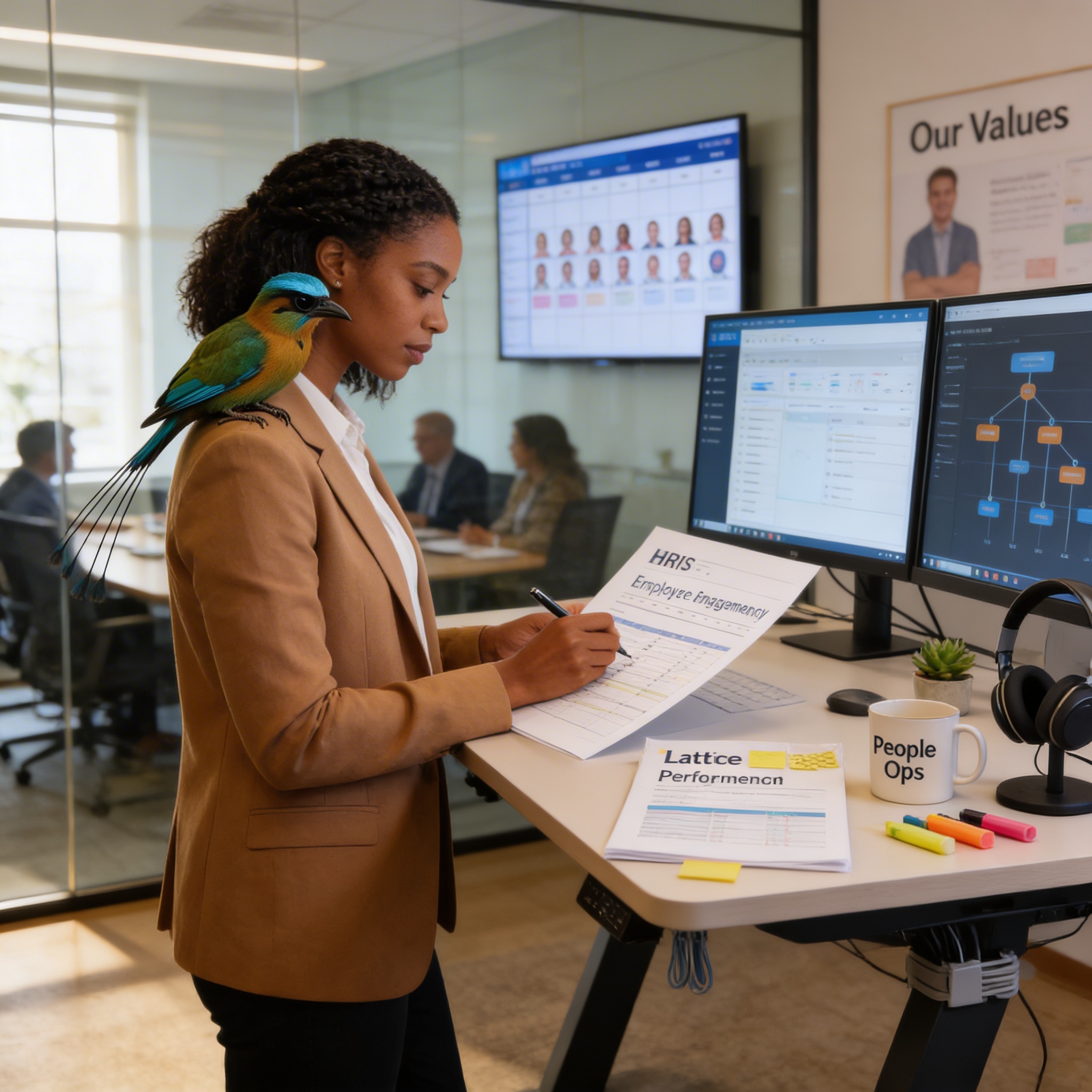
The organic trap most HR tech teams fall into is publishing content that attracts HR practitioners rather than HR software buyers. Employee engagement guides, performance review templates, onboarding checklists, and compliance explainers drive traffic from HR professionals doing their jobs, not evaluating platforms. The searches that produce demo requests go completely unaddressed: "BambooHR alternative for scaling teams," "best HR platform for remote-first companies under 200 people," "Rippling vs [your product] for mid-market," "HR software with built-in payroll for startups." Without those pages, the content that does exist generates traffic that never touches the demo flow.
The switching dynamics in HR tech create an unusually strong organic opportunity. 58% of buyers switch because their current platform can't scale with them, and they announce that intent through very specific searches, "outgrown BambooHR," "Gusto limitations at 100 employees," "moving off spreadsheets to HRIS." These are high-intent queries with identifiable buyers and low competition. Teams that build content specifically for the switching moment, by trigger, by company size, and by the specific failure mode buyers are escaping, can generate significant pipeline from searches the category leaders aren't structured to own.
The 2026 HR tech replacement wave makes timing critical. 25% of HR teams are actively planning stack overhauls, the largest single-year evaluation surge the market has recorded. That search activity is happening now, across thousands of companies at every growth stage. The teams that have comparison pages, use case content, and entity authority in place when buyers start those searches will earn pipeline that compounds for years. The teams that don't will watch Workday and BambooHR capture the intent that should have been theirs.
Why HR Platforms With Strong Products Still Lose in Search
BambooHR has a page ranking for "BambooHR alternative" that captures every buyer who outgrows their product. Your platform should own that moment, but right now it's invisible at exactly the highest-intent search in the category.
Done-For-You SEO That Pays for Itself
We build a done-for-you Google + AI search system that generates consistent inbound leads for your business without you writing a word or managing a single deliverable. Most of our clients see their first results within 90 days.
That's 3-6x faster than traditional SEO, and you don't need to touch it. If you're not seeing measurable traction by day 90, we keep working at no cost until you see results. Month-to-month after that. No lock-in.
How We Build Organic Acquisition Systems for HR Tech Platforms
HR buyers search by company size, switching trigger, compliance need, and team structure. Every lever below is built around how those buyers actually evaluate HR platforms, not a generic SEO framework repurposed for an HR context.
Comparison & Switching Trigger Page Architecture
HR buyers switch platforms for specific, searchable reasons: scalability failures, payroll errors, compliance gaps, pricing that doubles when you hire in a second state. We build comparison and alternative pages that target both competitor evaluation searches ("Rippling vs BambooHR," "Gusto alternative") and switching trigger searches ("outgrown BambooHR," "Workday too expensive for mid-market"), capturing buyers at the exact moment they're ready to change.
Company Size & Growth Stage Use Case Pages
HR software buying decisions are more tightly correlated to company size than almost any other SaaS category. "Best HRIS for 50-person team," "HR platform for Series B startup," "HR software for scaling from 100 to 500 employees", these searches self-qualify the buyer perfectly. We build a use case architecture segmented by headcount band, growth stage, industry, and team structure that maps your product to every high-intent buyer context.
Compliance & Payroll Feature Authority
Payroll compliance is the highest-stakes function HR software handles, and buyers research it thoroughly before committing. "Multi-state payroll compliance software," "HR software with ACA reporting," "HRIS with automated I-9 verification", these feature-specific searches signal buyers who are close to a purchase decision. We build the feature and compliance page architecture that captures those searches and connects them directly to your demo flow.
Topical Authority Across the HR Category
HR is a broad topical space, payroll, benefits, onboarding, performance management, engagement, recruiting, and compliance all sit under the same umbrella. We build a hub-and-spoke content architecture that covers the full category depth, linking feature pages, use case content, compliance guides, and comparison pages into a deliberate cluster that signals to Google your platform owns the HR software space.
Strategic Link Acquisition to Close the Authority Gap
BambooHR, Rippling, and Gusto have domain authority and review site profiles built over years. We close the gap through targeted link acquisition: digital PR around original HR and workforce data, integration partner links from your Slack, Google Workspace, and ATS ecosystem, placements on G2, Capterra, and TrustRadius, and executive bylines in HR and people operations publications your buyers read.
AI Search Visibility & Entity Authority
When a VP of People asks ChatGPT "what's the best HRIS for a 150-person remote-first company" or a founder asks Perplexity to compare BambooHR alternatives, the AI pulls from entity signals we build through SEO: brand mentions in HR publications, content tying your platform to specific company sizes, compliance needs, and use cases, and strong presence on the review platforms AI models treat as authoritative. We build this cluster so your platform appears in AI-generated HR shortlists at the first evaluation moment.
Three Ways to Work With Us
SEO Growth Blueprint
Strategic planning and execution roadmap. We map your category opportunity, build the content architecture, and provide the guidance your team needs to execute. You do the work, we provide the blueprint.
Complete SaaS SEO audit and category opportunity mapping
Keyword strategy and content architecture
Detailed execution briefs for your team
Quarterly strategy reviews and optimization
Fully Managed SEO
We handle everything. Strategy, content, authority building, technical optimization, and reporting. You get the pipeline without lifting a finger.
Complete execution of all SEO activities
Comparison, alternative, and use case content
Authority building and link acquisition
Monthly reporting and strategy calls
SEO Sprint
High-impact 90-day sprints focused on a specific objective: category positioning, competitor gaps, launching a new feature, or proving SEO ROI fast.
Focused 90-day engagement
Single objective with measurable outcome
Rapid execution and results
Option to extend or convert to ongoing
Built for Lean SaaS Teams in HR Tech
This isn't for Workday's or ADP's marketing department. It's for the HR platforms competing in the tier below them, the ones who need organic acquisition working without a dedicated SEO headcount, a 25-person content team, or an eight-figure marketing budget.
Your platform genuinely outperforms BambooHR for companies scaling from 100 to 500 employees. But when an HR Director searches "BambooHR alternative for scaling teams," your platform isn't in the results. Your blog publishes HR guides and compliance content that drives zero demo requests. You have no comparison pages against Rippling or Gusto, and no use case pages segmented by headcount or industry. You know the 2026 HR tech replacement wave is generating real search demand right now, and your platform has no architecture in place to capture it.
- "best HR software for scaling teams"
- "BambooHR alternative for growing companies"
- "HR platform with payroll and benefits"
You've built an HR platform purpose-designed for a specific industry, healthcare, professional services, tech companies, or distributed teams, where generic HRIS tools fail on compliance, scheduling complexity, or multi-state payroll. The buyers who need your product are searching for it. But your site lacks the vertical use case architecture, comparison content, and domain authority that Google requires to rank HR software pages. You need organic working in the background while you close deals and build the product.
- "HR software for healthcare companies"
- "HRIS for distributed remote teams"
- "best HR platform for professional services"
You own pipeline numbers and the board wants organic contribution to grow. The site has a blog and some feature pages, but organic drives less than 10% of demos and almost all of it is branded. Paid search is the dominant channel and efficiency is declining as CPCs climb. You know the switching trigger content, company size use case pages, and comparison architecture need to exist, but building them properly requires HR SEO specialization you don't have in-house. You need a partner who owns the execution while you own the strategy and reporting.
- "Rippling vs BambooHR for mid-market"
- "Gusto alternative for multi-state teams"
- "best HRIS for 100 to 500 employees"
Your competitors are capturing buyers during the exact moment they start evaluating alternatives.
We build the system. You close the pipeline it produces.
How HR Buyers Research and Evaluate Platforms Before They Talk to Sales
HR software buying decisions are rarely made by one person. The CHRO or VP of People drives the evaluation, but payroll, finance, and IT all have a vote. Most of the research happens independently, through Google, G2, and increasingly AI tools, before any vendor is contacted. The content we build maps to every stage of that multi-stakeholder journey, from the moment a team outgrows their current tool to the final vendor decision.
- "how to manage payroll for remote employees"
- "why is our HR data always out of sync"
- "onboarding process for fast-growing teams"
- "multi-state payroll compliance requirements"
Compliance guides, onboarding templates, and payroll explainers earn visibility here and seed brand recognition before the buyer starts actively evaluating HR platforms.
- "best HRIS for small business"
- "HR software with payroll and benefits"
- "best HR platform for remote teams"
- "HR software for 50 to 200 employees"
Category and company-size pages that rank here get your platform onto the consideration list before a formal evaluation begins or a shortlist hardens around competitors.
- "BambooHR alternative for scaling teams"
- "Rippling vs BambooHR for mid-market"
- "Gusto limitations at 100 employees"
- "best HR software for tech startups"
Comparison, alternative, and switching trigger pages built for these queries capture the buyer at peak purchase intent, these are the highest-converting pages on any HR platform's site.
- "[your platform] vs BambooHR pricing"
- "does [your platform] handle multi-state payroll"
- "[your platform] G2 reviews"
- "[your platform] free trial or demo"
Optimized feature and compliance pages, pricing SEO, and a strong G2 and Capterra presence ensure you don't lose the buyer at the final validation gate after they've already found you.
Your Transformation
This is a pipeline story. Here is what shifts when organic is built around buyer intent instead of just publishing content.
Organic drives less than 10% of demo requests, almost all from branded searches
Blog produces HR practitioner traffic that never reaches the demo or trial flow
No comparison pages for BambooHR, Rippling, Gusto, or Workday alternatives
No use case pages segmented by company size, industry, or growth stage
Paid search CAC climbing as HR keyword CPCs rise with 2026 replacement wave demand
Platform absent from AI-generated HR shortlists for every target use case and company size
Organic delivers a consistent, growing share of qualified demo requests every month
Comparison and switching trigger pages become the top demo-driving pages on the site
Platform ranks for every major competitor evaluation and alternative search in target segments
Company-size use case pages own the "best HR software for [headcount]" searches your buyers run
Organic CAC drops as content compounds, paid budget reallocated toward scaling what works
Platform cited in AI-generated HR software answers for target company sizes and use cases

What HR Tech Teams Ask Before Investing in SEO
Most HR content targets practitioners doing their jobs, performance review guides, onboarding templates, compliance checklists, not buyers evaluating software. If none of your content targets "BambooHR alternative for scaling teams," "best HRIS for 100-person remote company," or "Rippling vs [your product]," you're generating HR-adjacent traffic with zero purchase intent attached. We identify the gap between what you're producing and the searches that produce demo requests, then rebuild the architecture around conversion.
Not on the broadest category terms, "best HR software" is locked for the foreseeable future. But the searches that drive the most qualified demo requests are the segmented, high-intent queries the category leaders can't fully own: "best HR platform for scaling from 50 to 300 employees," "HR software for remote-first tech companies," "BambooHR alternative with better payroll automation." These have real volume, identifiable buyers, and far less competition. Teams that build for their specific niche, by company size, industry, or switching trigger, generate significant pipeline without needing to outrank Rippling on head terms.
HR buying committees make organic more valuable, not less. The CHRO, payroll manager, IT lead, and finance all research independently, each running their own searches from their own perspective. Comparison pages reach the HR Director. Compliance and payroll feature content reaches the payroll manager and finance team. Integration and technical pages reach IT. When your site has content mapped to each stakeholder's research path, you're present for every independent evaluation happening within the same buying committee.
G2 is a valuable floor, and we help you maximize your presence there as part of the link-building work. But G2 is a platform you don't control, whose ranking algorithm changes, and whose lead quality varies. Paid search fills the gap but HR keyword CPCs are climbing fast as the 2026 replacement wave drives more competition into the ad auction. Organic builds the asset that compounds, every comparison page and backlink makes the next one more effective, and cost per demo drops over time. The goal is a pipeline mix where organic's contribution grows every quarter while paid gets more efficient.
Months 1–2 cover technical fixes, comparison and use case page architecture, and initial link acquisition. Quick-win optimizations on existing pages frequently show ranking movement within 30–60 days. Months 3–6, newly built comparison, switching trigger, and company-size pages start ranking and attributable organic demo requests begin appearing. Broad category terms take longer, but the segmented, high-intent searches we prioritize first move faster, and those are the ones closest to a demo request.
Questions About How This Works for HR Tech Platforms
How long before we see demo requests from organic?
Months 1–2 cover technical fixes, comparison and company-size page builds, and initial link acquisition. Months 3–6 is when those pages start ranking for their target queries and attributable organic demo requests begin appearing. The switching trigger and company-size searches we prioritize, "BambooHR alternative for scaling teams," "best HRIS for 100-200 employees", move faster than broad head terms and are closest to demo request intent.
What pages do you actually build for an HR tech platform?
Core page types include: competitor comparison pages ("BambooHR vs [your platform]," "Rippling vs [your platform]"), alternative pages ("BambooHR alternative," "Gusto alternative for scaling teams"), company-size use case pages ("best HR software for 50-person teams," "HRIS for Series B startups"), industry pages ("HR software for tech companies," "HR platform for healthcare"), feature pages (payroll software, onboarding software, performance management, benefits administration), and compliance pages (multi-state payroll compliance, ACA reporting, I-9 verification). Together these map to every buyer evaluation stage.
How do switching trigger pages work in HR tech?
HR switching triggers are highly specific and searchable: "outgrown BambooHR," "Gusto doesn't support multiple states," "moving off spreadsheets to HRIS," "BambooHR no payroll." These searches are made by buyers who have already decided to switch, they just haven't chosen a replacement yet. Switching trigger pages that rank for these queries capture buyers at the highest possible purchase intent, with a clear conversion path to a demo that positions your platform as the natural upgrade.
How do you handle the multi-stakeholder HR buying committee?
We build content mapped to each stakeholder's independent research path. Comparison and use case pages reach the CHRO or VP of People. Payroll compliance and tax filing content reaches the finance and payroll team. Integration and IT security pages reach the IT lead. When your site has content covering each stakeholder's evaluation questions, you're present for every independent search happening within the same buying committee, building consensus before a single demo is ever scheduled.
How do you get our HR platform cited in ChatGPT and Perplexity answers?
When an HR Director asks ChatGPT "what's the best HRIS for a 150-person remote-first startup" or asks Perplexity to compare BambooHR alternatives, the AI builds its answer from entity signals we develop through SEO: brand mentions in HR publications and review platforms, structured content tying your product to specific company sizes and use cases, and strong presence on G2, Capterra, and TrustRadius. We build this entity cluster so your platform appears in AI-generated HR shortlists at the first evaluation moment.
What does reporting look like and what do we actually track?
We report against pipeline. Primary KPIs are organic demo requests, organic trial signups, and organic MRR contribution tracked through GA4 and your CRM. Secondary metrics include ranking movement for comparison, switching trigger, and company-size queries, organic share of total demos month-over-month, and domain authority progress relative to BambooHR, Rippling, and your direct competitors. We also track AI visibility, which HR queries surface your platform in ChatGPT and Perplexity answers, as the 2026 replacement wave drives significant AI-assisted HR research.
Your Next HR Platform Demo Request Is Already Searching. Are You Showing Up?
25% of HR teams are actively evaluating new platforms right now. Every day organic search goes unbuilt is another day BambooHR, Rippling, and Workday capture the demand that should be driving your pipeline. We map the gap, build the system, and show you exactly what it produces before you commit to a full engagement.
Get Your FREE SEO Audit Back to SaaS SEO Services