Dumpster Rental SEO Case Study: Calls & Leads Growth Diakachimba | SEO Agency
43%
Local SEO · Service RecoveryUnited States4–6 Month Campaign
Dumpster Rental SEO Case Study
+43%
Increase in organic traffic
+40%
Increase in conversions
Recovered
From previous declines
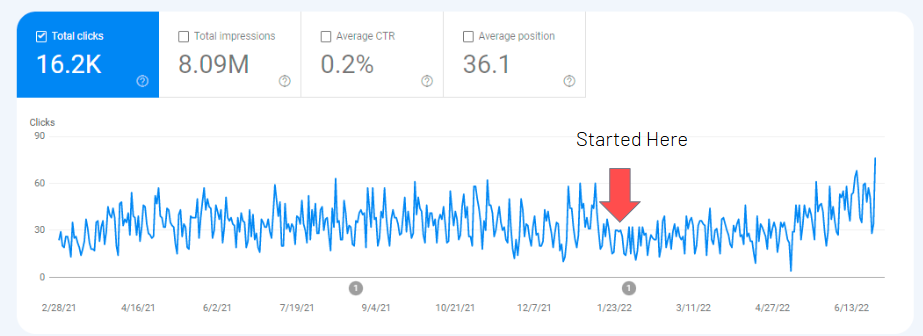
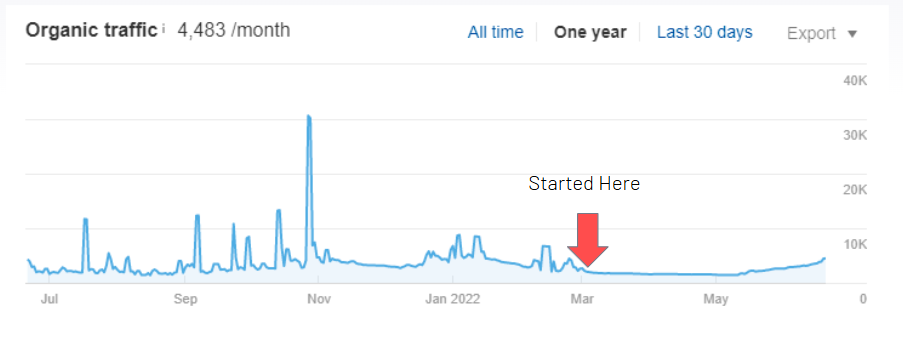
Traffic recovery: +43% growth through content expansion and location prioritization
SEMrush Graph
The Challenge
Thin Content and Traffic Declines Across Service Areas
The website had experienced multiple traffic declines and was not generating the consistent inbound leads needed to support the business. The core issue was not lack of coverage—the site had many location pages—but rather weak content that was not competitive in search results.
Key issues included:
90% of pages had extremely thin content, averaging around 90 words
20% of indexed URLs were not getting indexed by Google
Location pages lacked depth and competitive strength
Previous performance drops had reduced visibility across key service areas
No clear strategy to prioritize high-value locations
Instead of spreading effort thin across all locations equally, the strategy focused on identifying and prioritizing high-value service areas, expanding thin content with relevant service details and search-driven terms, and strengthening how pages connected across the site.
We identified the most valuable service areas based on search demand and commercial opportunity. This allowed us to focus resources on locations with the highest potential.
Thin content was the primary barrier to ranking. We expanded location pages with relevant service details, search-driven terms, and improved structure to make them competitive.
We introduced a blog to support location and service pages with informational content that could capture user intent at earlier stages of the customer journey.
We strengthened how content connected across the site to help search engines prioritize valuable URLs and users discover relevant services.
Step 01
Location Page Prioritization
We identified the most valuable service areas based on search demand and commercial opportunity. This allowed us to focus resources on locations with the highest potential.
Identified high-intent locations with strong search demand
Prioritized pages based on commercial search potential
Created a sustainable structure that could scale to additional locations
Focused expansion effort on the highest-ROI areas first
Step 02
Content Expansion
Expanded location pages with specific dumpster rental services and details
Added search-driven terms aligned with how users search for dumpster rentals
Improved clarity and structure for both users and search engines
Transformed 90-word pages into substantive, competitive content
Step 03
Blog Content Strategy
We introduced a blog to support location and service pages with informational content that could capture user intent at earlier stages of the customer journey.
Created content around dumpster rental use cases and scenarios
Topics included construction, renovation, and cleanup projects
Answered common customer questions related to service areas
Strategic internal linking fed traffic and authority to commercial pages
Step 04
Internal Linking Improvements
We strengthened how content connected across the site to help search engines prioritize valuable URLs and users discover relevant services.
Linked blog articles to relevant location and service pages
Improved navigation between related service areas
Created clear hierarchies to signal importance to search engines
Helped users and crawlers discover the site's full service offerings
Worth Noting
Thin Content Doesn't Always Recover on Its Own
Many businesses assume that once traffic drops, it will naturally recover. But thin content pages (90 words or less) typically stay weak unless deliberately improved. By prioritizing your highest-value locations and expanding content with specific, search-driven details, you can reverse declines and build momentum that compounds over time.
The improvements came from making the site’s existing pages competitive, focusing resources on high-value locations, and creating supporting content that fed traffic to commercial pages.
+43%
Increase in organic traffic
+40%
Increase in conversions
Reversed
Previous traffic decline
Market Position
The company improved visibility across key service areas and regained stability in its organic search presence. By prioritizing high-value locations, expanding thin content into competitive assets, and connecting pages through strategic internal linking, the business established a foundation for consistent inbound lead generation.
Our Process
A Repeatable Framework, Not a One-Off Win
Every engagement follows a deliberate three-phase system built to compound organic results over time.
01
Foundation Built
Technical cleanup and site structure optimization. Resolved crawl issues, improved internal linking, and built a scalable architecture.
02
Closing Gaps
Content expansion and optimization. Built topical authority and strategic internal linking to distribute page authority.
03
Expansion
Link acquisition and content scaling. Expanded keyword coverage and built authority to compete for high-value searches.
SEO Opportunity
What Could SEO Do for Your Website?
The strategy used in this case study works particularly well for businesses in your industry.
This approach works well for:
Businesses with little or no organic presence
Companies relying heavily on paid ads
Websites with strong demand but weak visibility
Brands looking to scale lead generation efficiently
Free SEO Opportunity Analysis
See what this could look like for your business
We offer a free SEO opportunity analysis. We will review your site and outline a realistic organic growth plan.