Category coverage
built around cybersecurity SaaS, MSSPs, MDR providers, penetration testing firms, compliance platforms, security consultancies, and managed security services.
We build organic acquisition systems for cybersecurity companies that generate qualified demos, consultation requests, and sales opportunities from Google and AI search tools, independent of paid media efficiency, event calendars, partner referrals, and outbound volume.
built around cybersecurity SaaS, MSSPs, MDR providers, penetration testing firms, compliance platforms, security consultancies, and managed security services.
connected to SIEM, SOAR, EDR, XDR, CNAPP, CSPM, SASE, ZTNA, IAM, PAM, vulnerability management, attack surface management, and incident response.
for CISOs, CIOs, security architects, SecOps leaders, IT directors, GRC teams, procurement committees, and risk executives comparing security vendors.
that reinforces credibility across NIST CSF, MITRE ATT&CK, ISO 27001, SOC 2, CMMC, PCI DSS, HIPAA, NIS2, DORA, and zero trust programs.
so your company appears when buyers use Google, AI Overviews, ChatGPT, Claude, and Perplexity to research threats, compare solutions, and build vendor shortlists.






Before a buyer requests a demo, books a security assessment, or sends an RFP, the buying group has already completed a large part of the evaluation independently. The CISO searches for category leaders. A security architect compares technical approaches. The SOC team checks integrations and deployment requirements. GRC validates framework coverage. Procurement reviews proof, pricing signals, and vendor risk. Increasingly, the same group asks AI tools to summarize options and recommend providers. Cybersecurity purchases carry operational, regulatory, and reputational risk. Buyers do not shortlist vendors because the homepage looks polished. They shortlist companies that demonstrate category depth, technical precision, credible proof, and a clear fit for their environment. The vendors that appear consistently across problem research, solution discovery, comparison searches, peer discussions, and branded validation enter sales conversations with trust already built. The vendors that depend entirely on analyst coverage, events, outbound, or partner referrals miss every qualified buyer who starts with search.
Threat-led, operational, and compliance content establishes authority while the buyer is defining the risk, documenting requirements, and building the internal business case.
Category, service-line, use-case, and industry pages must rank here so your company enters the buying process while the solution set is being defined.
Comparison, alternative, integration, and shortlist pages intercept buyers who are narrowing options and validating technical fit before they speak with sales.
Branded search control, proof pages, case studies, implementation content, and third-party authority validate the decision and reduce friction between shortlist, technical evaluation, and signed agreement.

The opportunity is not to publish more generic cybersecurity content. The opportunity is to own the commercial topics directly connected to your strongest product lines, buyer segments, industries, integrations, frameworks, and proof.
Your team may understand detection engineering, identity security, cloud risk, incident response, and compliance better than the companies outranking you. Search engines cannot reward expertise that is buried in product language, disconnected documentation, gated PDFs, or generic thought leadership.
Most cybersecurity websites are built around internal product terminology. Navigation mirrors the company org chart. Product pages describe features. Blog content reacts to breaches, vulnerabilities, and industry news. The site may look credible, but it does not cover the searches buyers use to define a problem, compare approaches, validate integrations, or build a shortlist.
That creates a structural acquisition gap.
Paid search captures existing demand but becomes expensive in high-value security categories. Events create concentrated opportunities but disappear when the calendar ends. Analyst relations influence enterprise deals but cannot cover every niche, use case, and mid-market evaluation. Outbound reaches target accounts, but it cannot manufacture the trust created when a buyer repeatedly finds your company during independent research.
Search does.
A strong cybersecurity SEO program turns your website into a category-level acquisition asset. It maps products and services to the language buyers use, builds technical depth around the problems your solution solves, earns authority from relevant sources, and makes your company understandable to both search engines and AI systems.
We build and run your complete organic acquisition system: strategy, technical SEO, content, digital authority, AI visibility, conversion paths, and reporting, so your cybersecurity team gains a compounding pipeline channel without creating another production operation to manage internally.
Engagements are priced to the size of the market and scope of work, starting at $2,500 per month. See how pricing scales.
Get StartedEvery engagement operates on one commercial rule: organic visibility is only valuable when it helps the right security buyers discover, trust, shortlist, and contact your company. These are the six levers we use to turn technical expertise into measurable demand.
Cybersecurity companies frequently organize websites around product names, internal business units, or broad labels such as platform, services, or solutions. Buyers rarely search using that structure.
They search for a capability tied to a specific problem: managed detection and response for Microsoft environments, penetration testing for SaaS applications, privileged access management for healthcare, cloud security posture management for multi-cloud infrastructure, or incident response retainers for mid-market organizations.
We reverse-engineer how your category is actually searched and build a page architecture around the combinations that carry commercial intent:
A cybersecurity SaaS company may need separate clusters for EDR, XDR, ransomware protection, endpoint visibility, Microsoft integrations, healthcare security, and competitor alternatives. An MSSP may need dedicated architecture for MDR, managed SIEM, SOC-as-a-Service, vulnerability management, incident response, and regional service demand.
Each page receives one clear search purpose and one clear conversion path. Supporting resources reinforce the commercial page rather than competing with it.
The result is a site search engines can understand, buyers can navigate, and sales can use.
Security buyers do not evaluate technology in a vacuum. They evaluate whether it fits their attack surface, architecture, regulatory exposure, team capacity, and risk model.
A generic page about cloud security cannot satisfy a financial-services security leader assessing data residency, third-party risk, identity controls, and audit requirements. A broad page about penetration testing cannot answer a SaaS buyer comparing web application testing, API testing, cloud configuration review, remediation validation, and SOC 2 evidence needs.
We build topical clusters that connect your offer to the environments where it creates value:
This content is not written as a glossary farm. Each cluster connects technical detail to buyer intent, product fit, proof, and a next step.
The depth helps search engines associate your brand with the right cybersecurity entities. It also gives AI systems enough consistent information to retrieve, summarize, and cite your company accurately.
A buyer searching for MDR vs MSSP, SIEM vs XDR, [competitor] alternatives, or best penetration testing companies is no longer learning the basics. The buying group is forming a point of view and reducing the field.
Most cybersecurity companies surrender this stage to software directories, publishers, affiliates, analyst summaries, and competitors.
We build decision-support content that answers the comparison honestly and positions your company without turning every page into a disguised sales pitch.
The program can include:
The strongest comparison content explains where each option fits, the tradeoffs, the operational requirements, and the questions a buyer should ask. That clarity builds more trust than declaring your company the winner in every scenario.
Done correctly, these pages rank for high-intent evaluation queries, support sales enablement, and put your company in the conversation before the first demo.
Cybersecurity buyers have a low tolerance for vague claims, recycled statistics, and content written by people who do not understand the category.
Technical accuracy is therefore both a conversion requirement and a search advantage.
We build an editorial system that combines search data with subject-matter expertise. Content briefs define the buyer, threat model, use case, framework, architecture, entities, claims requiring validation, and commercial purpose before drafting begins. Your SMEs review the details that genuinely require internal knowledge rather than rewriting generic copy from scratch.
Credibility signals are then reinforced across the site:
Authority acquisition follows the same logic. We prioritize links and mentions from cybersecurity publications, technology media, standards and association ecosystems, partner sites, integration marketplaces, podcasts, research collaborations, and industry resources.
The objective is not a random increase in referring domains. It is to strengthen the trust graph around the categories you need to own.
Security buyers now use AI tools to define categories, summarize frameworks, compare vendors, create RFP questions, and build shortlists.
A buyer may ask:
AI systems do not simply choose the website with the most blog posts. They assemble answers from entities, relationships, structured content, third-party mentions, clear claims, and sources they can retrieve with confidence.
We strengthen the signals that make your brand easier to understand and cite:
Traditional SEO and AI visibility are not separate campaigns. Both depend on crawlability, authority, semantic clarity, technical depth, and repeated evidence across the web.
Cybersecurity revenue teams do not need another dashboard showing impressions and average keyword position. They need to know which organic entry points create qualified accounts, influence opportunities, and contribute to pipeline.
The challenge is that security buying cycles are rarely linear.
A prospect may first read a ransomware readiness guide, return through a comparison page, share an integration page with a security architect, attend a webinar, search the brand, and request a demo several weeks later. Last-click reporting gives the final page all the credit and hides the role organic search played in creating and advancing demand.
We configure reporting around the full journey:
Monthly reporting translates search performance into the language leadership uses: qualified pipeline, opportunity value, product-line contribution, customer acquisition efficiency, and compounding channel growth.
Your marketing team gets the evidence required to defend investment and decide where the next content, technical, and authority resources should go.

We review the site and market, prioritize the strongest opportunities, then expand the work that produces traction.
We review security services, risk and compliance triggers, technical buyers, trust evidence, site architecture, authority, and pipeline attribution to identify what limits qualified search demand.
We prioritize and implement solution and compliance pages, problem-aware content, technical issues, case evidence, authority signals, and demo paths around real buyer and vendor-selection behavior.
We use search, conversion, and attribution signals to expand the topics and assets producing qualified demos, security consultations, and sales opportunities.
This is the before and after for cybersecurity companies that turn organic search into a coordinated acquisition system. The left column reflects how most security vendors operate today. The right column reflects what a compounding search and authority program produces over 12 to 18 months.
New pipeline depends heavily on paid search, conferences, partner referrals, analyst exposure, outbound sequences, and the personal networks of founders or sales leaders.
The website describes products and features but does not rank for the threat, use-case, framework, industry, comparison, and integration searches buyers use during evaluation.
Technical knowledge lives across SMEs, product documentation, webinars, PDFs, sales decks, and internal enablement material instead of a connected search architecture.
Content reacts to breaking news and vulnerabilities but has no durable relationship to commercial pages, target accounts, or qualified pipeline.
Competitors, publishers, directories, and review platforms control the searches that shape category perception and vendor shortlists.
Product launches and category expansions begin without established organic authority, forcing paid media and outbound to create every initial touch.
Reporting emphasizes traffic and rankings while leadership struggles to see which organic activities created opportunities or influenced revenue.
Organic search generates qualified demos, assessment requests, and sales conversations from buyers actively researching the security problems your company solves.
Product, use-case, threat, industry, compliance, integration, and comparison pages cover the complete evaluation path and build trust before sales engagement.
Technical expertise is converted into a connected knowledge system that search engines, AI tools, prospects, and sales teams can navigate.
Content supports durable category ownership, earns links, generates AI citations, enables sales conversations, and continues producing value after publication.
Your company appears during category discovery and vendor evaluation instead of allowing competitors and third-party sites to define the market unchallenged.
New product lines enter the market with an existing authority base, internal-link network, publishing system, and measurable search demand.
Every meaningful organic conversion is tracked to product line, intent stage, and pipeline outcome so leadership can see the channel's commercial contribution.
B2B SEO
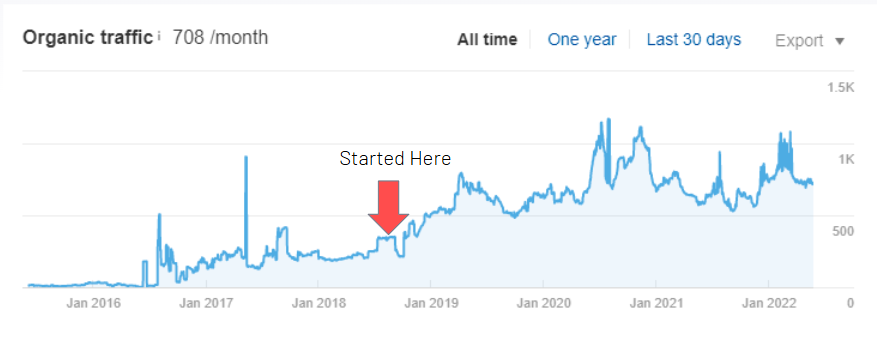
The strategy transformed the site from a brand-dependent asset into a search-driven acquisition channel targeting high-value enterprise buyers.
You built the company around a strong product, specialized security expertise, a differentiated service model, or a team the market trusts.
Early growth came from founder relationships, channel partners, investor networks, existing clients, targeted outbound, and a few major industry events. Those channels created momentum, but they do not produce predictable category visibility on their own.
You know the company needs a durable inbound asset. You also know cybersecurity SEO cannot be delegated to a generic content vendor that does not understand the product, the buyer, or the cost of getting technical claims wrong.
You need an organic program tied to pipeline, not publishing volume.
You own pipeline contribution in a market where paid acquisition is expensive, attribution is messy, and buyers resist low-context outreach.
Your team already runs campaigns, webinars, events, paid search, ABM, partner marketing, and product launches. Organic search is on the roadmap, but it is usually fragmented across a few blog posts, an agency producing generic content, or an internal specialist without enough technical and editorial support.
You need organic to work as part of the broader revenue system.
That means pages built for target accounts and buying stages. Content that can support paid, ABM, nurture, and sales. Reporting that shows sourced and influenced pipeline. A strategy that prioritizes commercial intent before chasing broad traffic.
You translate complex security capabilities into messaging the market can understand.
You coordinate product launches, sales enablement, customer proof, website updates, analyst materials, events, webinars, and content, often with limited internal capacity and slow access to SMEs.
You know the company has enough expertise to own valuable search territory. The problem is converting that expertise into a structured, technically accurate publishing system while everything else on the roadmap still needs to ship.
You need a partner that can do the production work, manage the system, and use SME time efficiently.
Those channels reach buyers through relationships, concentrated campaigns, or direct targeting. Search captures a different moment: the buyer is actively defining a security problem, comparing approaches, validating a requirement, or building a shortlist.
A security leader searching for managed detection and response for Microsoft environments, a SaaS company looking for an API penetration testing partner, or a government contractor researching CMMC compliance platforms is expressing intent your outbound team did not create.
SEO does not replace partner, event, analyst, or outbound channels. It strengthens them. Prospects exposed through another channel use search to validate your company. Sales teams use ranking content during follow-up. Events generate more value when attendees later find authoritative pages. Analyst awareness compounds when your brand also appears across category research.
The commercial advantage is simple: your company becomes discoverable and credible even when no campaign is actively pushing the buyer toward you.
The engagement is designed to protect SME time.
We handle SERP analysis, keyword architecture, content briefs, drafting, on-page optimization, internal linking, publishing coordination, authority work, and reporting. Before an expert sees a draft, the page already has a defined buyer, use case, technical scope, required entities, commercial purpose, and list of claims that need validation.
Your SMEs are not asked to become writers. They confirm what only your company can confirm: technical accuracy, product behavior, implementation details, differentiators, limitations, and real-world experience.
We also reuse existing knowledge from documentation, webinars, sales calls, enablement material, case studies, research, and product marketing assets so the same expertise does not need to be explained repeatedly.
The objective is a controlled review workflow that captures internal knowledge without turning your security team into a content department.
AI can accelerate research, clustering, drafting, and quality control. It cannot replace source validation, product knowledge, technical review, or editorial judgment.
Every important page begins with a structured brief covering search intent, buyer role, threat model, environment, frameworks, category entities, competitor coverage, claims requiring support, internal sources, and the conversion objective.
Drafts are checked for terminology misuse, unsupported absolutes, framework confusion, stale statistics, invented product capabilities, and language that experienced security buyers would reject. High-risk technical claims are routed for SME review. Pages are updated when products, threats, regulations, or frameworks change.
The production system uses automation for speed and consistency while retaining human control over accuracy, positioning, and proof.
The output should read like a company that understands the category, not a content machine paraphrasing the first page of search results.
The timeline depends on your current authority, technical health, category competition, publishing velocity, and how much high-intent demand already exists.
Existing sites with usable authority and underoptimized product or service pages can see meaningful ranking movement and early qualified conversions within roughly 3 to 5 months. New domains, category-creation plays, major migrations, and highly competitive enterprise software categories usually require a longer authority-building window.
The broader system compounds over 12 to 18 months as commercial pages mature, supporting clusters expand, backlinks accumulate, branded search grows, and your company appears across more traditional and AI-driven research journeys.
We sequence the work around time to commercial impact. Existing pages with demand and near-page-one rankings are improved first. Missing bottom-of-funnel pages come next. Broader authority content follows the revenue path instead of delaying it.
Not by attacking the broadest category keyword with a thinner version of the incumbent's homepage.
Smaller companies win by narrowing the search battlefield to the areas where they have genuine product strength and the larger competitor is structurally generic.
That may be a specific environment, buyer segment, industry, compliance requirement, integration, deployment model, threat, or use case: MDR for Microsoft-first mid-market companies, penetration testing for B2B SaaS APIs, PAM for healthcare organizations, CMMC readiness for defense contractors, or incident response for regional financial institutions.
We identify these closable segments through competitor rankings, content gaps, backlink profiles, SERP composition, conversion value, and your real sales data. We then build enough connected depth to become the most relevant answer within that segment.
Domain authority matters. Specificity, topical depth, information gain, internal linking, proof, and relevant links can overcome a large authority gap when the query is narrow and the fit is real.
The strongest lead-generating keywords usually combine a security category with a buyer constraint or evaluation signal.
Examples include managed detection and response for mid-market companies, penetration testing services for SaaS, CMMC compliance platform, cloud security posture management software, incident response retainer, SOC 2 automation tool, privileged access management for healthcare, and [competitor] alternatives.
Commercial intent also appears in modifiers such as best, top, services, company, provider, platform, software, pricing, cost, comparison, alternatives, implementation, integration, assessment, and consultant.
We prioritize keywords using 4 filters: relevance to the offer, likelihood of purchase intent, realistic ability to rank, and expected pipeline value. Search volume alone is not enough. A low-volume query tied to a high-value security engagement can be worth more than thousands of visits from students, job seekers, or general awareness searches.
Yes. The underlying SEO system is consistent, but the architecture changes by business model.
Cybersecurity SaaS companies usually need product, solution, feature, integration, industry, alternative, and technical education clusters tied to demos, trials, or product-led conversion paths.
MSSPs and MDR providers need service-line, technology-environment, industry, location, assessment, and urgent-response pages tied to consultations and sales conversations.
Penetration testing, red-team, incident-response, and security consulting firms need pages organized around testing scope, methodology, standards, industry requirements, deliverables, credentials, and buyer risk.
GRC and compliance platforms need framework-specific clusters covering SOC 2, ISO 27001, CMMC, HIPAA, PCI DSS, NIS2, DORA, vendor risk, evidence collection, and continuous compliance.
The keyword map follows the way each buyer purchases the specific offer, not a generic cybersecurity template.
We map content to the person making the search and the decision that page needs to support.
A security engineer comparing EDR telemetry, detection logic, API coverage, or deployment requirements needs technical specificity. A CISO evaluating business risk, team capacity, implementation time, and total cost needs a clear executive frame. Procurement and legal need proof, terms, data handling, and vendor-risk information.
Some pages serve one audience. Others use layered structure: a concise executive summary, a decision table, a technical explanation, architecture or workflow detail, proof, and clear next steps.
The goal is not to simplify every security topic. It is to make the right depth available without forcing every reader through the same path.
This improves search performance because the page satisfies multiple related intents while remaining useful to the buying group that will share and evaluate it internally.
We build links and mentions that make sense within the cybersecurity trust ecosystem.
Tactics can include original research, expert commentary, digital PR, partner and integration pages, association resources, podcasts, contributed technical articles, statistics pages, tools, templates, vulnerability or threat research, scholarship of industry data, and reclamation of unlinked brand mentions.
Targets are evaluated for topical relevance, real readership, editorial quality, indexing, traffic history, outbound-link patterns, and reputational fit. We avoid treating all referring domains as equal.
Commercial pages may also need direct authority support, especially in competitive categories. The mix between digital PR, relationship-led placements, niche edits, contributed content, and linkable assets depends on the domain, risk appetite, and current backlink gap.
The objective is controlled authority growth that improves ranking capacity without surrounding a security brand with obviously low-quality placements.
Yes, and these are moments when SEO should be involved before the public launch rather than after traffic disappears.
For migrations and rebrands, we map existing URLs, rankings, backlinks, internal links, metadata, canonicals, redirects, structured data, and priority pages before deployment. We then validate crawlability, indexation, rendering, analytics, and ranking movement after launch.
For new products and categories, we research the language buyers already use, adjacent categories, competing definitions, problem-aware demand, integration searches, and comparison opportunities. The launch architecture can then include category education, product pages, use cases, alternatives, glossary definitions, FAQs, and proof rather than a single isolated announcement page.
Search data also helps product marketing test naming and positioning. When the market has no established category term, we build around the known problem and adjacent language while the new category gains recognition.
AI visibility is measured as a pattern, not a single rank position.
We track whether the brand, product, or content appears for defined prompts across relevant answer engines and Google AI experiences. Prompt sets are grouped by category discovery, problem research, comparisons, vendor recommendations, integrations, industries, and branded questions.
We also monitor the sources cited in answers, the competitors mentioned, the claims associated with your company, referral traffic from AI platforms, branded-search changes, and the pages most frequently retrieved or referenced.
Because AI outputs vary by model, location, session, and prompt wording, the goal is not to report a misleading universal ranking. The goal is to increase consistent inclusion across commercially relevant prompt families and improve the quality and accuracy of how the company is represented.
The same work that supports AI visibility, including clear entities, useful content, technical accessibility, authority, structured data, and corroborating mentions, also strengthens conventional SEO.
Every day your company is absent from category, comparison, threat, compliance, and vendor-research searches, another provider earns the trust and the conversation. We build the organic acquisition system that puts your cybersecurity company in front of CISOs, security teams, IT leaders, risk owners, and procurement groups before a demo request, RFP, partner introduction, or outbound sequence reaches them.
Get Your Free SEO Growth Plan Or explore how our engagements are structured