Service-line coverage
built around custom software development, web and mobile applications, AI development, cloud engineering, DevOps, data platforms, application modernization, QA, product design, and systems integration.
We build organic acquisition systems for software development companies that generate qualified discovery calls, RFPs, and high-value project opportunities from Google and AI search, independent of founder referrals, outbound volume, directory rankings, and paid acquisition.
built around custom software development, web and mobile applications, AI development, cloud engineering, DevOps, data platforms, application modernization, QA, product design, and systems integration.
connected to project outsourcing, dedicated development teams, staff augmentation, co-development, managed delivery, nearshore, offshore, and onshore engagements.
for CTOs, CIOs, VPs of Engineering, product leaders, technical founders, operations teams, transformation leaders, and procurement groups comparing development partners.
demonstrated through architecture, technology stacks, delivery methods, security, compliance, team composition, code quality, case studies, and measurable project outcomes.
so your company appears when buyers use search engines, AI Overviews, ChatGPT, Claude, and Perplexity to research approaches, compare firms, and create vendor shortlists.







Most buyers do not begin by searching for a company name. They begin with a business problem, a stalled product roadmap, missing technical capacity, legacy systems, integration risk, or a need to launch faster. Technical leaders assess architecture and engineering depth. Product teams assess delivery speed and product thinking. Operations and finance examine cost, continuity, and commercial risk. Security and procurement validate controls, contracts, and vendor stability. Before the first call, buyers may have reviewed service pages, case studies, Clutch profiles, technical articles, leadership credentials, GitHub activity, delivery models, and AI-generated recommendations. The firms visible across that process enter the conversation with trust already built.
Problem-led content reaches buyers while they are defining the business case, delivery risk, and possible solution.
Service, delivery-model, industry, technology, and use-case pages position your firm while the buyer defines the vendor category.
Comparison, cost, process, and shortlist content helps buyers reduce the field before contacting sales.
Branded proof, delivery documentation, security content, team details, and commercial expectations validate the final decision.

It is qualified demand from companies with a real project, budget, technical requirement, and reason to engage an external development partner.
Most development firms describe themselves using the same broad claims:
The claims may be accurate. They are rarely specific enough to rank, differentiate the company, or reduce buyer risk.
Services are often compressed into a single page covering custom development, mobile apps, cloud, AI, DevOps, QA, staff augmentation, and modernization. Industry expertise is listed without dedicated proof. Technology-stack pages repeat documentation-level information. Case studies hide the commercial and technical details buyers need.
The website fails to explain:
That creates a positioning and acquisition gap.
Broad keywords are crowded by global consultancies, directories, listicles, and thousands of firms making similar claims. Generic educational content competes with developer documentation, major technology vendors, and AI-generated answers.
The opportunity exists in narrower commercial territory.
A strong software development SEO program connects services, industries, use cases, technologies, delivery models, proof, and buyer questions into one search architecture. It gives each priority niche enough depth to rank and enough evidence to convert.
The objective is not more traffic from developers looking for tutorials or candidates searching for jobs.
We build and run your complete organic acquisition system: strategy, technical SEO, content, authority, AI visibility, conversion paths, and revenue reporting, so your software development company gains a compounding source of qualified opportunities without creating another production operation for your team to manage.
Engagements are priced to the size of the market and scope of work, starting at $2,500 per month. See how pricing scales.
Get StartedOrganic visibility matters when it helps the right buyers discover, validate, and contact your firm. These six levers connect search demand to commercially viable software engagements.
Buyers search for specific solutions, not a generic list of development capabilities.
We map separate commercial pages around custom software, modernization, AI, cloud, data, mobile, web applications, DevOps, QA, integrations, dedicated teams, staff augmentation, and nearshore delivery.
Each page has one intent, one ideal buyer, relevant proof, clear qualification signals, and the correct conversion path.
A healthcare buyer evaluates interoperability and HIPAA. A fintech buyer cares about security, auditability, and transaction reliability. A logistics buyer needs workflow and systems-integration experience.
We build connected clusters around industries, business use cases, platforms, architectures, and technology stacks where your firm has genuine delivery depth.
The content proves applied expertise instead of publishing generic programming tutorials.
High-value software engagements create technical, financial, and operational risk.
We build decision-support pages around build versus buy, in-house versus outsourced development, nearshore versus offshore, staff augmentation versus dedicated teams, pricing models, estimation, discovery, handover, intellectual property, security, and vendor selection.
Clear tradeoffs help buyers self-qualify and reduce objections before the first call.
Buyers need evidence that your team can deliver production software, not another article explaining Agile.
We turn case studies, architectures, technical decisions, migration plans, performance improvements, open-source work, engineering leadership, and project outcomes into search-ready proof.
Every asset connects a problem, approach, technology, constraint, and result to the relevant commercial service page.
Software buyers validate firms across Clutch, partner ecosystems, technical communities, media, review platforms, and AI assistants.
We strengthen profiles, earn relevant mentions and backlinks, clarify company entities, implement structured data, and publish citation-worthy technical assets.
The result is a more consistent trust footprint across traditional search and AI-generated recommendations.
Traffic is useless when inquiries lack budget, urgency, decision authority, or project fit.
We align forms and conversion paths with project type, budget range, timeline, team model, industry, technology, and delivery stage.
Reporting connects organic entry pages to qualified opportunities, estimated contract value, sourced pipeline, influenced pipeline, win rate, and closed revenue.

We review the site and market, prioritize the strongest opportunities, then expand the work that produces traction.
We review development services, technical problems, platforms, industries, buyer roles, delivery proof, technical health, and opportunity tracking to identify what limits qualified search demand.
We prioritize and implement service, solution, and comparison pages, technical issues, technical content, case evidence, authority, and discovery-call paths around real buyer and vendor-selection behavior.
We use search, conversion, and attribution signals to expand the topics and assets producing qualified discovery calls, RFPs, and high-value project opportunities.
This is the before and after for software development firms that turn organic visibility into a coordinated acquisition system.
New business depends on founder relationships, referrals, outbound campaigns, directory placements, partner introductions, and unpredictable RFPs.
The website lists every service but gives search engines and buyers no clear reason to associate the firm with a specific problem, industry, technology, or engagement model.
Case studies focus on attractive screenshots and broad claims instead of architecture, constraints, decisions, delivery process, and measurable outcomes.
Content targets generic topics such as Agile, cloud computing, AI, and mobile development that attract broad traffic but create little qualified demand.
The firm appears on Clutch or listicles but does not control enough first-party search territory to build trust independently.
Technical expertise remains trapped inside engineering teams, sales calls, proposals, internal documentation, and completed projects.
Marketing reports sessions and rankings without showing which pages generate qualified opportunities or high-value contracts.
Organic search generates discovery calls and RFPs from buyers actively evaluating software development partners.
Service, industry, use-case, technology, delivery-model, and comparison pages cover the complete research journey.
Case studies prove how the team solves difficult problems and connect directly to the services buyers are evaluating.
Content targets commercial questions, project risks, technical decisions, and buyer objections rather than generic tutorial traffic.
The company builds authority across its website, directories, technical communities, media, partner ecosystems, and AI-generated recommendations.
Engineering knowledge becomes a reusable search and sales asset without turning developers into full-time content writers.
Every meaningful conversion is tracked to project fit, opportunity value, pipeline stage, win rate, and revenue contribution.
B2B SEO
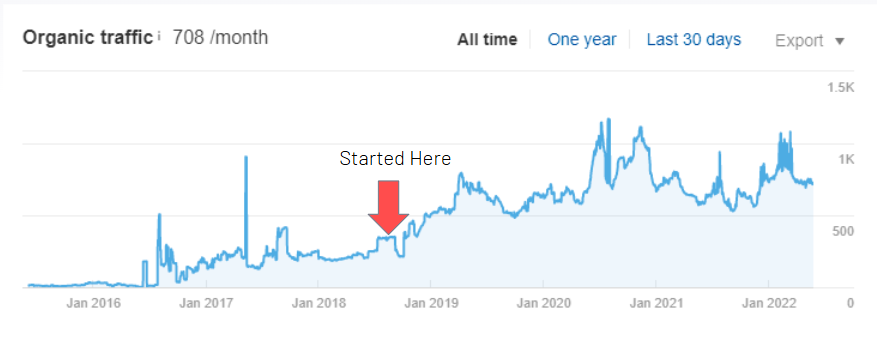
The strategy transformed the site from a brand-dependent asset into a search-driven acquisition channel targeting high-value enterprise buyers.
You built the firm through delivery quality, relationships, referrals, and technical reputation.
Now pipeline is too dependent on channels you cannot predict, and the market is crowded with firms making the same claims.
You need buyers with a real initiative, realistic budget, internal ownership, and a reason to use an external team.
SEO should create warmer conversations, not more unqualified form submissions.
You manage the website, content, case studies, directories, campaigns, and sales enablement with limited access to engineering experts.
You need execution that extracts technical knowledge efficiently and turns it into a scalable acquisition system.
Referrals transfer trust from an existing relationship. SEO must build that trust through repeated evidence.
A qualified buyer may discover your firm through an industry page, review a relevant case study, compare delivery models, inspect leadership and technical content, check external reviews, and return through branded search before contacting you.
That journey can produce strong opportunities, but only when the strategy targets specific problems and buyer profiles.
Broad traffic around coding tutorials will not recreate referral quality. High-intent service, niche, comparison, and proof pages can reach buyers outside your network when a real project becomes active.
Developers validate expertise; they do not run the content operation.
We use existing case studies, proposals, architecture notes, webinars, sales calls, documentation, GitHub activity, and interviews to create structured briefs and drafts.
Technical reviewers confirm the details only they can verify: architecture, constraints, tradeoffs, security, performance, tooling, and outcomes.
This creates a controlled review process instead of asking engineering teams to write articles from scratch.
No.
Publishing a page for every industry, framework, and programming language creates a wide but shallow website.
We prioritize niches where four conditions overlap:
Depth in a few valuable segments usually outperforms unsupported claims across twenty verticals and thirty technologies.
Established sites with usable authority and underoptimized commercial pages may see early movement within three to five months.
New domains, major repositioning, competitive global terms, and weak backlink profiles require a longer runway.
The system compounds over 12 to 18 months as service clusters mature, case studies accumulate, authority grows, and the company appears across more search and AI-assisted buying journeys.
We sequence near-page-one pages, high-intent gaps, and existing proof first to shorten the path to commercial impact.
Yes, on a narrower battlefield.
A boutique firm may not win a broad term such as software development company. It can win searches combining an industry, use case, delivery model, architecture, platform, or modernization problem.
Specificity allows the page to provide stronger proof and a clearer fit than a global competitor's generic service page.
The strategy is to become the strongest answer for the work your company is unusually qualified to deliver.
Examples include healthcare software development company, legacy application modernization services, nearshore development partner, and dedicated Java development team.
We prioritize project value and buyer fit over raw search volume.
Yes.
A SaaS company sells a repeatable product. A development firm sells expertise, delivery capacity, and project outcomes.
The development-firm strategy relies more heavily on service pages, vertical proof, case studies, engagement models, technical credibility, and lead qualification.
Each page should own one primary intent.
Service pages explain what you deliver. Industry pages prove domain experience. Technology pages support buyers with a genuine stack requirement.
Internal links connect the layers without creating duplicate pages for every possible combination.
Yes, especially when they explain the searchable problem.
Strong case studies include the business context, technical constraints, architecture, delivery approach, decisions, technologies, and measurable result.
They support rankings, conversion, sales enablement, backlinks, and AI citations.
They matter because buyers use them for discovery and validation.
The goal is not to depend on one directory. It is to align directory profiles, reviews, service categories, case studies, and company positioning with the search territory your own website is building.
We track qualified discovery calls, RFPs, opportunities, project type, budget fit, estimated contract value, sourced pipeline, influenced pipeline, win rate, and closed revenue.
Traffic and rankings remain useful diagnostics, not the final measure.
Every day your firm is absent from service, industry, technology, delivery-model, comparison, and vendor-selection searches, another development company earns the shortlist. We build the organic acquisition system that puts your company in front of CTOs, product leaders, engineering teams, transformation executives, and procurement groups before a referral, directory, outbound sequence, or RFP introduces them.
Get Your Free SEO Growth Plan Or explore how our engagements are structured