
Product and capability coverage
built around product families, manufacturing processes, materials, tolerances, applications, industries, certifications, part numbers, and request-for-quote searches.
We build organic acquisition systems for B2B manufacturers that generate qualified RFQs, distributor inquiries, specification opportunities, and sales conversations from Google and AI search, independent of trade-show calendars, rep networks, referrals, and paid media.
built around product families, manufacturing processes, materials, tolerances, applications, industries, certifications, part numbers, and request-for-quote searches.
connected to engineers, sourcing managers, procurement teams, plant managers, operations leaders, MRO teams, distributors, OEM buyers, and executive decision-makers.
for OEMs, contract manufacturers, custom fabricators, component suppliers, equipment manufacturers, industrial distributors, and complex B2B catalogs.
that reinforces expertise across grades, dimensions, finishes, production volumes, lead times, quality controls, CAD files, datasheets, standards, and compliance requirements.
so your company appears when buyers use Google, AI Overviews, ChatGPT, Claude, and Perplexity to research products, compare processes, qualify suppliers, and build sourcing shortlists.









Manufacturing buyers rarely begin with a supplier name. They begin with a requirement: a material, process, tolerance, certification, production volume, part number, application, lead-time problem, or replacement component. Engineering validates technical fit. Procurement compares suppliers. Operations evaluates capacity and risk. Quality checks certifications. Leadership reviews commercial impact. By the time an RFQ is submitted, the buying group may already have reviewed capability pages, downloaded drawings, compared materials, checked certifications, and eliminated suppliers with weak websites. The manufacturers visible throughout that research process enter the RFQ with an advantage.
Diagnostic and engineering content reaches buyers while they are defining the production problem and available options.
Capability, product, material, application, industry, and certification pages position your company while the supplier category is being defined.
Comparison, qualification, process, and supplier-selection content helps buyers reduce the shortlist before the RFQ.
Branded proof, quality documentation, capacity details, case studies, and RFQ guidance validate the final supplier decision.

It is greater visibility for the products, processes, applications, industries, and technical requirements most likely to create profitable work.
Your company may hold the right equipment, certifications, engineering knowledge, quality systems, capacity, and production experience.
That does not mean buyers can find it.
Most manufacturing websites are organized around the internal company structure rather than the way buyers source. Products sit under vague navigation labels. Capabilities are compressed into one page. Materials, tolerances, applications, production volumes, standards, and industries are mentioned without dedicated search targets.
Technical assets often exist, but they are disconnected:
The website may look professional while failing to answer the questions that determine supplier fit.
That creates a structural acquisition gap.
Trade shows create concentrated demand but disappear when the event closes. Distributor and rep networks extend reach but can capture branded search demand. Paid search buys temporary visibility. Sales outreach reaches target accounts, but often before the account has an active sourcing requirement.
Search reaches buyers when the technical requirement already exists.
A strong manufacturing SEO program turns the website into a connected product, capability, and supplier-qualification system. It maps pages to how engineers and procurement teams search, makes technical assets crawlable, builds authority around priority markets, and tracks which organic paths become RFQs and revenue.
The objective is not more general manufacturing traffic.
We build and run your complete organic acquisition system: strategy, technical SEO, product and capability content, authority, AI visibility, conversion paths, and revenue reporting, so your manufacturing company gains a compounding source of qualified RFQs without creating another production operation for your team to manage.
Engagements are priced to the size of the market and scope of work, starting at $2,500 per month. See how pricing scales.
Get StartedOrganic visibility matters when it helps the right technical buyers find, qualify, and contact your company. These six levers connect search demand to commercially viable manufacturing work.
Industrial buyers search by exact requirements: product family, manufacturing process, part number, material, tolerance, standard, application, production volume, or replacement need.
We map those searches to dedicated product, capability, category, and part-number pages. Each page receives one clear purpose, relevant technical data, supporting proof, related internal links, and the right RFQ path.
The architecture is prioritized by revenue potential, not raw search volume. A highly specific aerospace process or replacement-part query may generate more value than a broad manufacturing term.
A buyer needs more than a process name. They need to confirm that you can support the required material, tolerance, application, volume, quality system, and certification.
We build connected pages around commercially relevant combinations such as:
Each page explains the technical requirement, manufacturing considerations, relevant controls, and your fit as a supplier. This builds semantic depth without creating thin, automated combinations.
Manufacturing sites often hide valuable product data behind duplicate templates, filters, PDFs, JavaScript, or disconnected catalog systems.
We fix the technical rules governing:
The goal is not to index every possible URL. It is to make high-value products and technical assets crawlable, distinct, connected, and easy to move from search to specification to RFQ.
Manufacturers frequently lose high-intent searches to distributors, directories, resellers, and competitors, even for their own products.
We build decision-stage content around process comparisons, material choices, replacement parts, supplier qualification, domestic versus overseas sourcing, custom versus standard products, competitor alternatives, and total cost of ownership.
We also define which searches belong to the manufacturer, distributor, rep, or territory page so branded demand reaches the correct conversion path without creating channel conflict.
Engineers and procurement teams look for proof: specifications, CAD files, certifications, equipment, quality controls, case studies, capacity, and named expertise.
We turn internal knowledge into concise, technically reviewed content while acquiring relevant authority from trade publications, associations, partners, distributors, engineering resources, and industry media.
Clear entity relationships, structured data, original technical assets, expert review, and third-party corroboration also improve how search engines and AI systems understand and cite the company.
More inquiries are not useful when the work falls outside your materials, volumes, tolerances, certifications, geography, or margin requirements.
We align forms and conversion paths with the details estimating and sales need, including product, process, material, quantity, annual volume, certification, timeline, and drawing upload.
Reporting then connects organic entry pages to qualified RFQs, quote value, opportunities, win rate, revenue, and gross-margin contribution. Search data shows what buyers request; sales data shows which demand is worth scaling.

We review the site and market, prioritize the strongest opportunities, then expand the work that produces traction.
We review products, capabilities, materials, applications, technical buyers, specification needs, site health, proof, and RFQ tracking to identify what limits qualified search demand.
We prioritize and implement product and capability pages, technical issues, application content, specification proof, authority, internal links, and RFQ paths around real buyer and vendor-selection behavior.
We use search, conversion, and attribution signals to expand the topics and assets producing qualified RFQs, distributor inquiries, specification opportunities, and sales conversations.
This is the before and after for B2B manufacturers that turn organic search into a coordinated acquisition system. The left column reflects how most industrial websites operate today. The right column reflects what a compounding product, capability, authority, and attribution program produces over 12 to 18 months.
New opportunities depend on trade shows, referrals, distributors, sales reps, existing accounts, and outbound activity that cannot create demand consistently.
The website lists products and capabilities but does not rank for the materials, tolerances, applications, industries, certifications, part numbers, and supplier questions buyers actually search.
Technical assets are scattered across PDFs, CAD libraries, product databases, sales decks, and internal documents without a connected search architecture.
Distributors, directories, and resellers outrank the manufacturer for branded products, part numbers, and categories the manufacturer should control.
Generic blog content generates some traffic but does not help engineers specify a product, procurement qualify a supplier, or sales receive a stronger RFQ.
Catalog filters, duplicate variants, discontinued parts, and platform limitations waste crawl capacity and weaken priority product pages.
Marketing reports rankings and sessions while leadership cannot see which organic pages create RFQs, quote value, pipeline, or revenue.
Organic search generates qualified RFQs and sales conversations from buyers actively sourcing products, processes, parts, materials, and manufacturing capacity.
Product, capability, material, application, industry, certification, and part-number pages map directly to how technical buyers research and qualify suppliers.
Datasheets, drawings, CAD files, case studies, standards, and engineering knowledge operate as one connected commercial content system.
The manufacturer reclaims branded and category demand while distributor, territory, and rep pages route buyers through the correct channel.
Content supports specification, comparison, supplier qualification, sales enablement, links, and AI citations instead of filling a publishing calendar.
Technical rules keep priority catalog pages crawlable, distinct, internally connected, and protected through product changes and site migrations.
Every meaningful conversion is tracked from organic entry page to qualified RFQ, opportunity value, win rate, revenue, and margin contribution.
B2B SEO
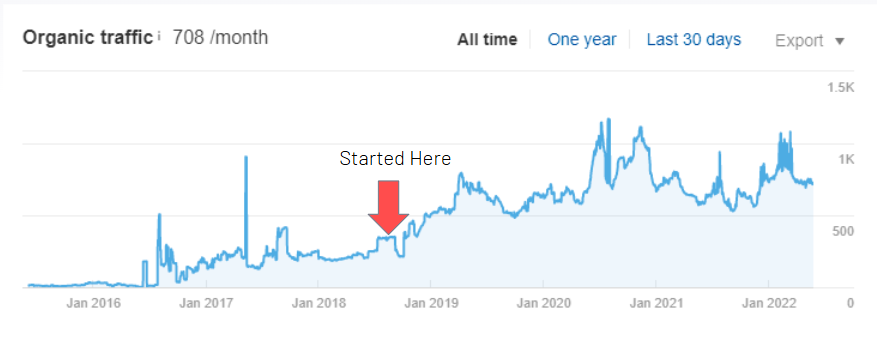
The strategy transformed the site from a brand-dependent asset into a search-driven acquisition channel targeting high-value enterprise buyers.
You built the business through quality, delivery, relationships, and technical capability.
Now growth depends too heavily on existing accounts, reps, referrals, trade shows, or distributors. You need a channel that creates net-new demand around the work you want most.
You do not need more low-quality form fills. You need buyers whose materials, volumes, tolerances, certifications, and timelines match the operation.
The goal is to make prospects better informed before estimating or sales gets involved.
You manage the website, product launches, trade shows, sales collateral, content, distributors, and reporting, often with limited access to engineers.
You need execution that converts technical knowledge into a scalable search system without creating a review bottleneck.
Those channels reach buyers already connected to your network or present at a specific event. Search reaches buyers when a technical requirement becomes active.
An engineer searching for a material-process combination, a sourcing manager looking for a certified domestic supplier, or an MRO buyer trying to replace an obsolete part is already expressing commercial intent.
The quality depends on the architecture.
Broad manufacturing content can attract students, job seekers, consumers, and irrelevant projects. Product, capability, material, certification, part-number, application, and supplier-selection pages attract buyers with defined requirements.
SEO also strengthens existing channels. Prospects met at trade shows validate the company online. Referred buyers check capabilities and certifications. Distributor demand can be routed correctly. Sales can reuse technical pages after the first conversation.
The channel works when it is built around RFQ quality rather than traffic volume.
Engineers should validate expertise, not manage the content operation.
We handle competitor analysis, keyword mapping, briefs, drafting, optimization, internal linking, publishing coordination, and performance reporting.
Before a technical reviewer sees a page, the scope is already defined: process, material, application, standards, claims, sources, buyer, and conversion goal.
The reviewer confirms what only the company can confirm:
Existing datasheets, drawings, presentations, case studies, sales calls, and technical documentation are reused so the same knowledge is not repeatedly extracted.
The objective is a controlled approval workflow, not turning engineering into a writing department.
No.
Every indexable page needs distinct search value, useful product information, and a clear role in the catalog.
Some part numbers deserve individual pages because buyers search them directly. Others should exist as variants under a parent product. Low-value filters may help users without being indexed. Discontinued products may need replacement guidance rather than deletion.
We evaluate:
Then we create rules for categories, products, variants, filters, discontinued parts, alternates, and cross-references.
The goal is not maximum page count. It is maximum discoverability for the parts and product combinations buyers genuinely source.
The timeline depends on domain authority, technical condition, catalog size, competition, current rankings, content depth, and the backlink gap.
An established manufacturer with strong products and pages already receiving impressions can see meaningful movement and early RFQs within roughly three to five months.
A new domain, large catalog cleanup, international rollout, website migration, or highly competitive national category usually requires a longer runway.
The broader system compounds over 12 to 18 months as product clusters mature, technical assets become discoverable, authority grows, and more buyer journeys lead back to the site.
We sequence the work around commercial impact:
The target is not the fastest possible traffic increase. It is the fastest defensible increase in qualified demand.
Yes, by becoming more relevant to a specific sourcing requirement.
A smaller manufacturer may not beat a national brand for a broad category. It can win for precise combinations of process, material, tolerance, certification, application, volume, industry, or geography.
Examples include:
We identify these segments through SERP composition, competitor architecture, link profiles, catalog gaps, buyer language, and sales data.
Then we build deeper technical coverage and stronger proof than the broader competitor provides.
Authority matters. Specificity, content depth, architecture, internal links, technical evidence, and relevant backlinks can overcome a large domain gap when the query is narrow and the manufacturing fit is real.
The strongest keywords combine a product or process with a technical requirement.
Examples include aerospace CNC machining, ISO 13485 contract manufacturer, custom stainless steel enclosures, low-volume injection molding, replacement part numbers, and product-plus-material searches.
We prioritize commercial fit, RFQ value, and ranking feasibility over raw search volume.
Each page needs one clear search purpose.
Product families own product demand. Capability pages own processes. Supporting pages cover materials, applications, industries, certifications, part numbers, and comparisons.
A keyword-to-URL map prevents overlap and connects the pages through deliberate internal links.
Yes, but they work best when supported by crawlable HTML pages.
The page should explain the asset, specifications, product relationship, application, revision status, and next step. The file then supports the page rather than replacing it.
This gives buyers useful technical detail while giving search engines enough context to understand the asset.
We target links that strengthen technical, industry, product, and supplier authority.
Useful sources include trade publications, associations, certification ecosystems, distributors, customers, engineering resources, podcasts, research, tools, case studies, and relevant editorial placements.
Relevance and buyer trust matter more than domain metrics alone.
Yes.
Before launch, we map category language, product alternatives, applications, technical questions, target industries, and competitor pages.
The launch can then include product, use-case, comparison, specification, FAQ, and supporting content instead of relying on one announcement page.
We track qualified RFQs, product and capability inquiries, opportunity value, pipeline, win rate, revenue, and margin contribution.
Rankings and traffic remain useful diagnostics, but reporting should show which organic pages create commercially viable work.
Every day your company is absent from product, capability, material, application, certification, part-number, and comparison searches, another supplier earns the shortlist and the RFQ. We build the organic acquisition system that puts your manufacturing company in front of engineers, sourcing teams, procurement leaders, plant managers, distributors, and executive buyers before a trade show, rep introduction, referral, or outbound sequence reaches them.
Get Your Free SEO Growth Plan Or explore how our engagements are structured