
Service-line coverage
built around managed IT services, co-managed IT, IT support, help desk, Microsoft 365, cloud services, cybersecurity, backup and disaster recovery, compliance, vCIO, and IT consulting searches.
We build organic acquisition systems for managed service providers that generate qualified consultations and recurring-revenue opportunities from Google and AI search tools, independent of referral volume, vendor-funded campaigns, networking groups, outbound sequences, and paid search costs.
built around managed IT services, co-managed IT, IT support, help desk, Microsoft 365, cloud services, cybersecurity, backup and disaster recovery, compliance, vCIO, and IT consulting searches.
connected to CEOs, COOs, CFOs, CIOs, IT directors, office managers, operations leaders, compliance teams, and internal IT departments evaluating an outsourced technology partner.
for city, metro, regional, and multi-location searches where buyers expect nearby support, responsive service, and evidence that your team already understands their business environment.
that reinforces fit across per-user pricing, device coverage, service-level agreements, onboarding, response times, remote monitoring and management, professional services automation, vendor management, and technology roadmaps.
so your MSP appears when buyers use Google, AI Overviews, ChatGPT, Claude, and Perplexity to research managed IT options, compare providers, estimate costs, and build shortlists.








Most MSP buyers do not start by requesting a proposal. They start with a problem: recurring downtime, slow support, security gaps, rising IT costs, compliance pressure, or an internal team that has reached capacity. The buying group then researches independently. The CEO looks for reliability. Finance wants predictable costs. Operations compares response times. Internal IT evaluates co-managed support, security coverage, and escalation capacity. By the time a prospect contacts an MSP, they may already have compared local providers, read reviews, checked service pages, and asked an AI tool for recommendations. The providers visible throughout that research process enter the sales conversation with trust already built.
Diagnostic content reaches buyers while they are defining the problem and the cost of leaving it unresolved.
Service, industry, technology, and location pages position your MSP while buyers decide which support model fits.
Comparison, pricing, location, and shortlist content helps buyers narrow the field before booking a call.
Reviews, proof, service expectations, and branded search visibility validate the final decision.

The opportunity is not to publish another article titled "10 Benefits of Managed IT Services." The opportunity is to own the commercial searches connected to your strongest services, best-fit client profile, service territory, technology stack, compliance expertise, and recurring-revenue model.
Your team may deliver faster support, stronger security, cleaner documentation, better account management, and more strategic guidance than the MSPs outranking you. Search engines cannot reward capability that is buried beneath generic service descriptions, duplicated vendor content, thin city pages, and a blog written for nobody in particular.
Most MSP websites use the same vocabulary:
The claims may be true, but they do not create a distinct search footprint. They do not explain which businesses you serve best, which environments you manage, what problems trigger an engagement, how onboarding works, or why a buyer should choose your support model over another provider.
The typical MSP site also mixes every service onto a few broad pages. Managed IT, cybersecurity, cloud, Microsoft 365, compliance, backup, consulting, and help desk all compete for relevance on the same URL. Location targeting is often limited to a city name in the footer. Industry expertise is mentioned without dedicated proof. Blog content reacts to technology news but never connects back to revenue pages.
That creates a structural acquisition gap.
Referrals close business from companies already connected to your network. Vendor campaigns can create bursts of activity. Paid search captures immediate demand but becomes expensive in competitive metros. Outbound can reach the right accounts but struggles when every MSP sends the same message.
Search captures companies already experiencing the problems you solve.
A strong MSP SEO program turns your website into a local and vertical acquisition asset. It maps services to the language prospects use, builds authority around high-value industries and technologies, strengthens local trust, answers comparison-stage questions, and makes your company understandable to search engines and AI systems.
We build and run your complete organic acquisition system: strategy, technical SEO, local search, content, authority, AI visibility, conversion paths, and revenue reporting, so your MSP gains a compounding source of qualified opportunities without creating another production operation for your team to manage.
Engagements are priced to the size of the market and scope of work, starting at $2,500 per month. See how pricing scales.
Get StartedEvery engagement operates on one commercial rule: organic visibility is only valuable when it helps the right businesses discover, trust, shortlist, and contact your MSP. These are the six levers we use to turn service capability into measurable pipeline.
Most MSPs try to rank one broad managed IT services page for every offer and every buyer.
That forces one URL to cover managed support, help desk, Microsoft 365, cloud, cybersecurity, backup and disaster recovery, compliance, vCIO, projects, and consulting. Search engines receive an unclear relevance signal. Buyers receive a shallow explanation of the service they actually need.
We reverse-engineer how businesses search for outsourced IT and build a page architecture around commercial intent.
The structure can include:
Each service receives a clear search purpose, defined buyer, relevant proof, and conversion path. Supporting resources reinforce the commercial page instead of competing with it.
The architecture is sequenced around economics, not vanity volume. A service with lower search demand but a high contract value, strong retention, and a clear fit for your delivery model may deserve priority over a broad keyword that attracts tiny companies, residential support requests, or one-off break-fix work.
We also account for the client profile you actually want:
The result is a site that ranks for the work you want rather than generating noise your sales team has to filter.
Managed services are delivered remotely, but buyer trust is still heavily influenced by geography.
A company searching for managed IT services in Dallas, IT support in Chicago, or an MSP near Boston often wants evidence that the provider serves its market, understands local business conditions, can deliver on-site support when required, and already has clients nearby.
Most MSP location strategies fail in one of two ways.
The first is underinvestment: one homepage tries to rank across an entire state or region.
The second is scale without substance: dozens of city pages repeat the same copy with the location name swapped.
We build a local architecture tied to real operating coverage and buyer value:
Each location page needs a reason to exist. It should explain which services are available, which businesses are a fit, how support is delivered, whether on-site coverage exists, which industries are common in the market, and what proof supports the claim.
For multi-location MSPs, we prevent internal competition by assigning clear geographic ownership to each office and page. For regional MSPs, we expand market coverage in a controlled sequence based on contract value, competition, operational reach, and existing authority.
Local visibility is not just a Maps exercise. It is a connected system spanning organic results, Google Business Profiles, reviews, citations, locally relevant pages, backlinks, and branded search.
Businesses do not buy managed IT in the abstract. They buy support for a specific operating environment.
A law firm evaluates document security, remote access, client confidentiality, and practice-management applications. A healthcare organization cares about HIPAA, endpoint control, business continuity, and vendor risk. A manufacturer may need plant connectivity, legacy systems, multi-site support, and security across operational technology. A financial-services firm evaluates access controls, resilience, auditability, and regulatory exposure.
The same applies to technology environments and compliance requirements.
A Microsoft-first organization may search for an MSP experienced with Microsoft 365, Azure, Entra ID, Intune, Defender, Teams, and SharePoint. A government contractor may need CMMC and NIST support. A SaaS business may need SOC 2 readiness, cloud operations, identity management, and around-the-clock support.
We build connected topical clusters around the segments where your MSP has genuine experience:
Industries
Technology environments
Compliance and risk
Each cluster connects buyer problems to your service model, methodology, proof, and next step.
This is where smaller MSPs can beat larger generalists. A national provider may have more authority overall, but a specialist MSP can become the most relevant result for managed IT services for architecture firms in [GEO], CMMC IT support for defense contractors, or co-managed Microsoft 365 support for a 250-user company.
Depth beats generic scale when the query is specific and the proof is credible.
The searches closest to a sales conversation often receive the least attention.
Buyers want to know:
Most MSP websites avoid these topics because the answer depends on the environment. That leaves directories, generic publishers, and competitors to frame the decision.
We build decision-support content that explains the variables without inventing a universal price or making promises the service team cannot keep.
The program can include:
The strongest comparison content states where each option fits, where it does not, and what a buyer should ask before signing.
That honesty improves conversion quality. Prospects arrive with more realistic expectations, a clearer understanding of the model, and fewer basic objections for sales to resolve.
For MSPs, trust is distributed across the web.
A buyer may find your service page in Google, inspect your Google Business Profile, read Clutch or industry directory reviews, check vendor partnerships, search the founders, ask ChatGPT for local recommendations, and then return through a branded query.
Your website is the center of the system, but it is not the only evidence used to evaluate the company.
We strengthen the authority and entity signals surrounding your MSP:
Authority acquisition is judged by commercial relevance, not raw domain metrics. A link from a respected local business publication, Microsoft partner ecosystem, industry association, or vertical trade resource may do more for buyer confidence than a higher-metric site with no connection to managed services.
The same trust graph supports AI visibility.
AI systems assemble answers from clear entities, service relationships, structured content, reviews, third-party mentions, and sources they can retrieve confidently. We make your brand easier to understand and cite through:
Traditional SEO, local trust, reputation, and AI visibility are not separate campaigns. They are different outputs of the same authority system.
An MSP does not need more traffic from job seekers, residential users, tiny break-fix requests, vendors, or companies outside the service area.
It needs qualified businesses that match the delivery model and contract economics.
We configure the conversion system to capture and qualify the signals that matter:
Conversion paths are matched to intent.
A problem-aware visitor may engage with an IT risk assessment or pricing guide. A comparison-stage buyer may request a service-fit review. A high-intent visitor on a managed IT or local page should be able to book a consultation without navigating through generic resources.
Reporting then connects search performance to recurring-revenue outcomes:
Monthly reporting gives leadership a commercial view of the channel. You can see whether managed IT, cybersecurity, co-managed IT, cloud, compliance, or vertical pages are producing the right accounts, and allocate resources accordingly.
The objective is not to prove that traffic increased. It is to show that organic search is contributing to recurring revenue.

We review the site and market, prioritize the strongest opportunities, then expand the work that produces traction.
We review managed services, business risks, technology environments, buyer roles, local markets where relevant, technical health, proof, and revenue tracking to identify what limits qualified search demand.
We prioritize and implement service, solution, and comparison pages, technical issues, trust content, authority, local signals, and consultation paths around real buyer and vendor-selection behavior.
We use search, conversion, and attribution signals to expand the topics and assets producing qualified consultations and recurring-revenue opportunities.
This is the before and after for managed service providers that turn organic search into a coordinated acquisition system. The left column reflects how most MSPs operate today. The right column reflects what a compounding local, content, authority, and conversion program produces over 12 to 18 months.
New clients depend on referrals, networking groups, vendor introductions, outbound sequences, acquisitions, and paid campaigns that the MSP cannot predict or scale efficiently.
The website lists managed IT, cybersecurity, cloud, backup, and support services but ranks for very few searches used by qualified businesses in the service territory.
The same generic service language appears across every page, making the MSP difficult to distinguish from dozens of local competitors offering apparently identical solutions.
City pages are thin or nonexistent. Google Business Profiles, reviews, citations, local proof, and organic location pages are not operating as one coordinated system.
Industry experience lives in sales conversations and case studies but is not translated into vertical pages that demonstrate relevance to buyers in healthcare, legal, finance, manufacturing, or other priority sectors.
Content consists of vendor-supplied articles, general technology tips, and security news with no clear relationship to service-line revenue or buyer evaluation.
Sales receives leads outside the geographic area, below the minimum seat count, looking for one-off repairs, or needing services the MSP does not want to deliver.
Reporting shows traffic and rankings but cannot connect organic activity to qualified opportunities, monthly recurring revenue, annual contract value, or closed clients.
Organic search generates qualified consultations from businesses actively evaluating managed IT, co-managed support, cybersecurity, cloud, compliance, and continuity services.
Service pages map directly to buyer intent, target account criteria, and the offers that produce strong recurring revenue for the MSP.
The site communicates a clear position by market, industry, support model, technology environment, and client profile rather than repeating the same generic claims as every competitor.
Local pages, Google Business Profiles, reviews, citations, market-specific proof, and relevant backlinks create defensible visibility across priority cities and regions.
Vertical content demonstrates familiarity with each industry's applications, workflows, regulatory requirements, operational risks, and support expectations before the first sales conversation.
Content supports durable category ownership, earns links, appears in AI answers, enables sales, and continues creating demand after publication.
Forms, calls, calendars, and assessments qualify prospects by user count, location, service need, technology environment, and commercial fit before the lead reaches sales.
Every meaningful organic conversion is tracked to service line, geography, intent stage, opportunity value, and recurring revenue so leadership can see the channel's commercial contribution.
B2B SEO
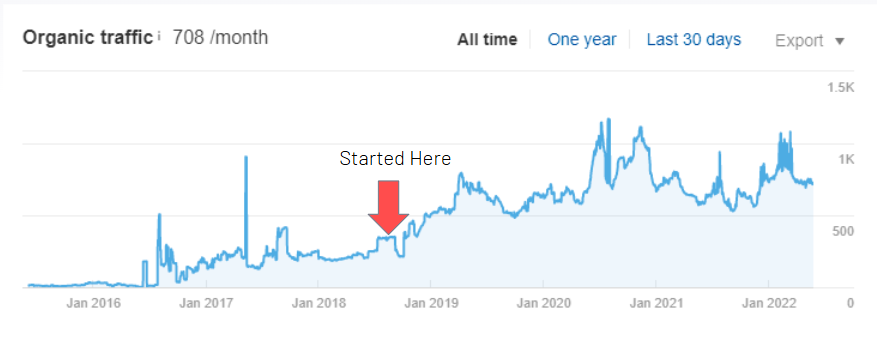
The strategy transformed the site from a brand-dependent asset into a search-driven acquisition channel targeting high-value enterprise buyers.
You built the MSP through strong delivery, long-term client relationships, and referrals.
Now growth is harder to predict. Paid search is more expensive, local competitors look increasingly similar, and referrals do not arrive on schedule.
You need an inbound channel tied to qualified opportunities and recurring revenue, not more marketing activity.
You do not need more form fills. You need businesses that match your seat count, service territory, support model, and contract economics.
The goal is to create warmer conversations with prospects already researching managed IT, co-managed support, cybersecurity, cloud, or compliance.
You manage the website, reviews, campaigns, content, vendors, events, and reporting, often without a dedicated SEO team.
You need a partner that handles execution, uses SME time efficiently, and connects local SEO, service pages, authority, content, and attribution into one system.
Referrals and vendor relationships reach companies already connected to your network. Search captures businesses outside that network at the moment they are actively researching an IT problem, service model, or provider.
A 150-user accounting firm searching for managed IT services with FTC Safeguards Rule support, a multi-location business comparing co-managed IT providers, or a healthcare group looking for Microsoft 365 and HIPAA support is expressing intent no referral program can manufacture on demand.
The quality depends on the targeting.
A broad traffic strategy can attract residential support, job seekers, tiny break-fix requests, and companies outside your market. A commercial MSP SEO strategy filters demand through service, geography, industry, technology environment, minimum user count, compliance need, and buying stage.
SEO does not replace referrals. It creates opportunities referrals cannot reach and gives referred prospects more evidence when they research your company before contacting you.
You need a page wherever there is meaningful local demand, real service coverage, and enough unique relevance to justify the URL.
That does not mean generating hundreds of pages by swapping city names.
A useful location page explains the services available in that market, the businesses served, whether on-site support is offered, local response expectations, nearby client proof, relevant industries, office or service-area information, and a clear conversion path.
Primary markets usually deserve full city or metro pages. Secondary markets may be covered through regional architecture until demand, proof, and authority justify expansion. Location-plus-service pages can be valuable when the service has distinct demand and commercial importance.
We map the structure before publishing to prevent cannibalization between office pages, city pages, regional pages, and the primary service URLs.
The rule is simple: every location page must serve a buyer and own a defined search territory. If it exists only to place a city name on the site, it is not ready to publish.
Vendor content is useful as a technical input, not as a finished search strategy.
When dozens of MSPs publish the same article, service description, or campaign page, none of them creates meaningful differentiation. The language is usually written to describe the vendor's product rather than your delivery model, buyer, market, proof, or commercial position.
We build content around information only your MSP can own:
Vendor materials can supply product details, security updates, and campaign themes. We rewrite and expand those inputs around original positioning, search demand, and buyer decisions.
The result is content that represents your MSP rather than acting as a syndicated extension of the vendor's marketing department.
The timeline depends on the domain's authority, technical condition, review profile, local competition, current rankings, website quality, publishing velocity, and backlink gap.
An established MSP with a credible domain, active Google Business Profile, strong reviews, and service pages ranking near page one may see meaningful movement and early qualified inquiries within roughly 3 to 5 months.
A new domain, major website rebuild, weak review footprint, competitive metro, or multi-location expansion usually needs a longer runway. The broader system compounds over 12 to 18 months as local pages mature, service clusters expand, authority links accumulate, branded search increases, and the company appears across more traditional and AI-assisted research journeys.
We sequence work around speed to commercial impact:
The first objective is not maximum traffic. It is the earliest defensible increase in qualified opportunity volume.
Yes, by refusing to compete as a generic MSP.
A smaller provider is unlikely to win by publishing a thinner version of a national company's managed IT homepage. It can win by becoming the most relevant result for a defined combination of market, service, industry, technology, and buyer profile.
Examples include:
We identify closable segments through ranking competitors, backlink profiles, local pack composition, search demand, client economics, sales win data, and your actual delivery strengths.
Then we build enough connected depth and proof to own those segments.
Large competitors have authority. Smaller MSPs can have sharper relevance, stronger local signals, better reviews, more specific proof, and a clearer service position. That combination wins commercially valuable searches.
The strongest MSP keywords combine a service with a location, industry, technology environment, compliance requirement, or buying signal.
Examples include managed IT services [city], co-managed IT services, Microsoft 365 managed services provider, IT support for law firms, CMMC managed service provider, and managed IT services pricing.
We prioritize commercial fit over raw volume. A low-volume term that produces a strong recurring contract can be more valuable than thousands of irrelevant visits.
Each page needs one clear search purpose.
Core service pages should own offers such as managed IT, co-managed IT, help desk, cybersecurity, cloud, backup, and compliance. Location pages should own geographic intent. Industry pages should own vertical intent.
We map keywords to URLs before production so pages support one another instead of competing for the same query.
Yes, especially for MSPs serving defined cities or regions.
Your profile should align with the correct location page and include accurate categories, services, business information, reviews, photos, and tracked links.
It works best as part of a wider local system that includes strong location pages, citations, reviews, local authority, and consistent entity signals.
We target links that strengthen service, local, technology, and industry authority.
Useful sources can include vendor ecosystems, local business publications, chambers, industry associations, client partnerships, podcasts, trade publications, expert commentary, research, tools, and relevant editorial placements.
We judge opportunities by relevance, real traffic, editorial quality, and buyer trust, not domain metrics alone.
Yes, provided the MSP can genuinely sell and deliver in that market.
For a new city, we assess local competition, reviews, service coverage, authority, and contract potential. For a new vertical or service, we map buyer problems, terminology, proof requirements, and supporting content.
The goal is to establish visibility before referrals and reputation have fully matured.
We connect organic search to qualified leads, opportunities, MRR, annual contract value, and closed clients.
Tracking can include forms, calls, calendars, CRM source data, landing-page history, user-count qualification, service interest, opportunity value, and assisted conversions.
Traffic is useful for diagnosis. Qualified pipeline and recurring revenue are the operating metrics.
Every day your MSP is absent from local, service, industry, pricing, compliance, and comparison searches, another provider earns the trust and the conversation. We build the organic acquisition system that puts your company in front of business owners, operations leaders, finance teams, and IT decision-makers before a referral, vendor campaign, networking introduction, or outbound sequence reaches them.
Get Your Free SEO Growth Plan Or explore how our engagements are structured